Viking Raids
Interactive passage with audio narration, comprehension questions, and printable PDF.
By completing this purchase you agree to our Terms of Use and Privacy Policy. Your subscription renews automatically until you cancel. You can cancel anytime from your account settings. All sales are final and non-refundable. Digital content is available for download in your account immediately upon purchase.
What's included
Viking Raids preview and details
About this printable Viking Raids reading passage (Grades 5-8)
Sample passage and quiz from Viking Raids
Reading passage and comprehension quiz preview
Viking Raids
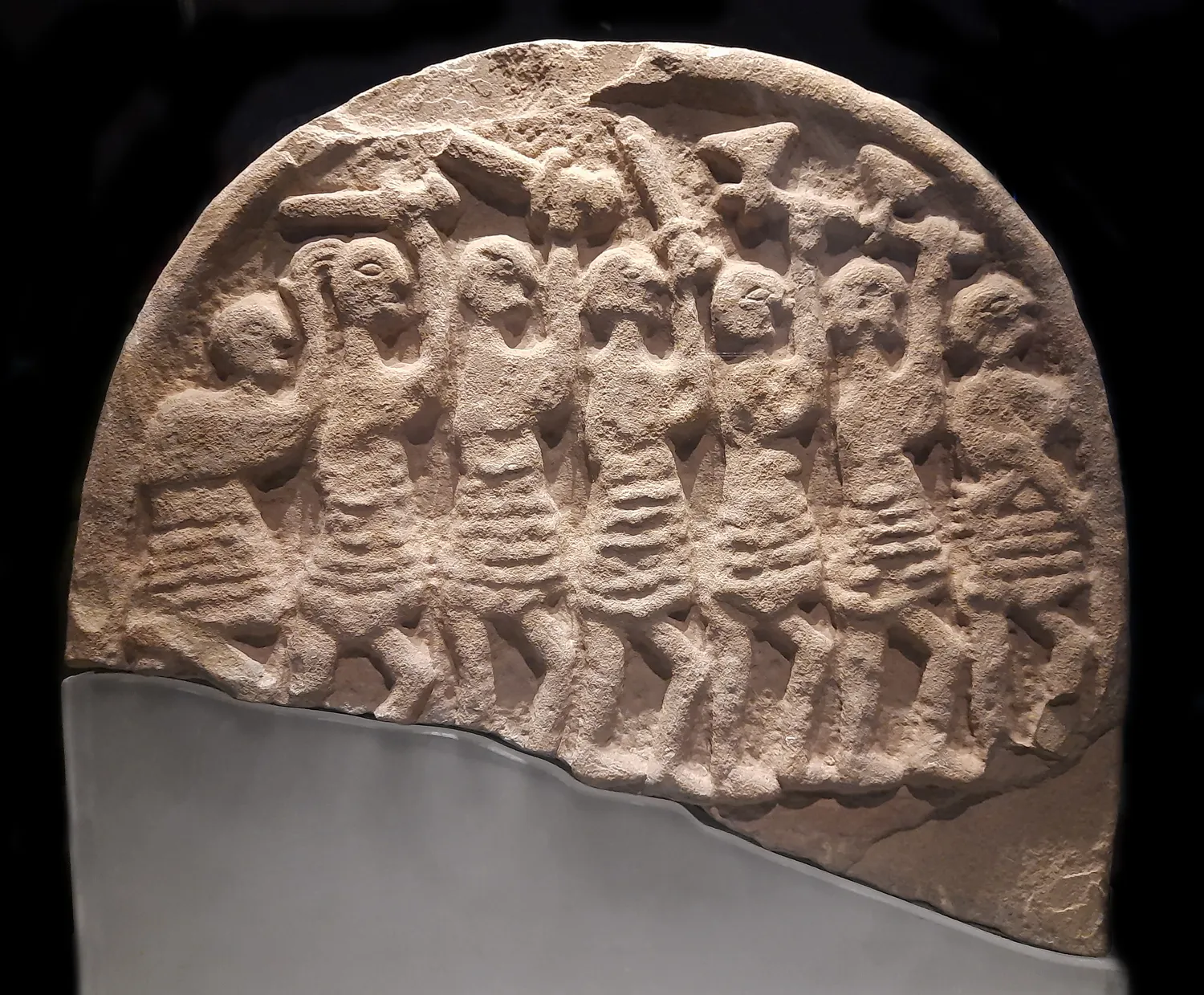
"Viking Raider Doomsday Stone front" by User: Schillerwein / Wikimedia Commons.
The Viking raids began in 793 CE with a dramatic attack on the island monastery of Lindisfarne, off the northeast coast of England. This event shocked people throughout Europe and marked the start of an era when Norse warriors, often called Vikings, launched sudden and violent raids on towns and religious communities across the continent.
The Vikings came from Scandinavia, a region that includes modern-day Norway, Sweden, and Denmark. Their society was organized around small kingdoms and clans led by powerful chieftains. Many Vikings were skilled sailors and used longships that could travel both across open seas and up shallow rivers. This allowed them to strike without warning. The attack on Lindisfarne was recorded by the Anglo-Saxon Chronicle, a primary source written by English monks. According to these records, the Vikings looted the monastery, killed many of the monks, and took valuable treasures. Archaeologists have found evidence of burned buildings and broken artifacts at Lindisfarne, confirming the violence of the raid.
Monasteries like Lindisfarne were frequent targets because they were wealthy and poorly defended. These religious centers stored gold, silver, and important manuscripts, making them attractive to raiders. For example, the monastery at Iona in Scotland was attacked several times in the following decades. Towns along rivers, such as Paris and Hamburg, also suffered raids. The Vikings used their ships to travel deep inland, surprising communities that thought they were safe from sea attackers. Over time, some Vikings began to settle in the lands they raided, establishing new communities and trading posts.
The impact of the Viking raids was significant. They caused fear and instability in many regions, leading to changes in how people built villages and defended themselves. Some rulers built fortifications and organized local militias. The raids also influenced European culture and language, especially in areas where Vikings settled. While the attacks were destructive, they also led to increased trade and cultural exchange between Scandinavia and the rest of Europe. Historians still debate whether the Vikings were motivated mainly by poverty, adventure, or the desire for wealth, but it is clear their raids changed the course of the Middle Ages.
The beginning of Viking raids connects to larger themes in world history, such as the movement of peoples, the exchange of cultures, and the impact of warfare on society.
Interesting Fact: The famous Lindisfarne Gospels, a beautifully illustrated book, survived the 793 raid and is now one of the most treasured artifacts from early medieval England.
Comprehension quiz (8 questions)
1. When did the raid on Lindisfarne happen?
2. Where did the first major Viking raid occur?
3. Which source described the Lindisfarne raid?
4. Why did Vikings target monasteries?
5. What effect did Viking raids have on Europe?
6. How did Vikings surprise towns?
7. Vikings were from Scandinavia. True or false?
8. What is a 'monastery'?
Perfect for the way you teach
- Build comprehension skills
- Auto-graded quiz
- Differentiated reading
- Read together at home
- Improve fluency
- Quiet reading time
- Reading curriculum support
- Independent practice
- Track Lexile growth