Visigoths Sack Rome
Interactive passage with audio narration, comprehension questions, and printable PDF.
By completing this purchase you agree to our Terms of Use and Privacy Policy. Your subscription renews automatically until you cancel. You can cancel anytime from your account settings. All sales are final and non-refundable. Digital content is available for download in your account immediately upon purchase.
What's included
Visigoths Sack Rome preview and details
About this printable Visigoths Sack Rome reading passage (Grades 5-8)
Sample passage and quiz from Visigoths Sack Rome
Reading passage and comprehension quiz preview
Visigoths Sack Rome
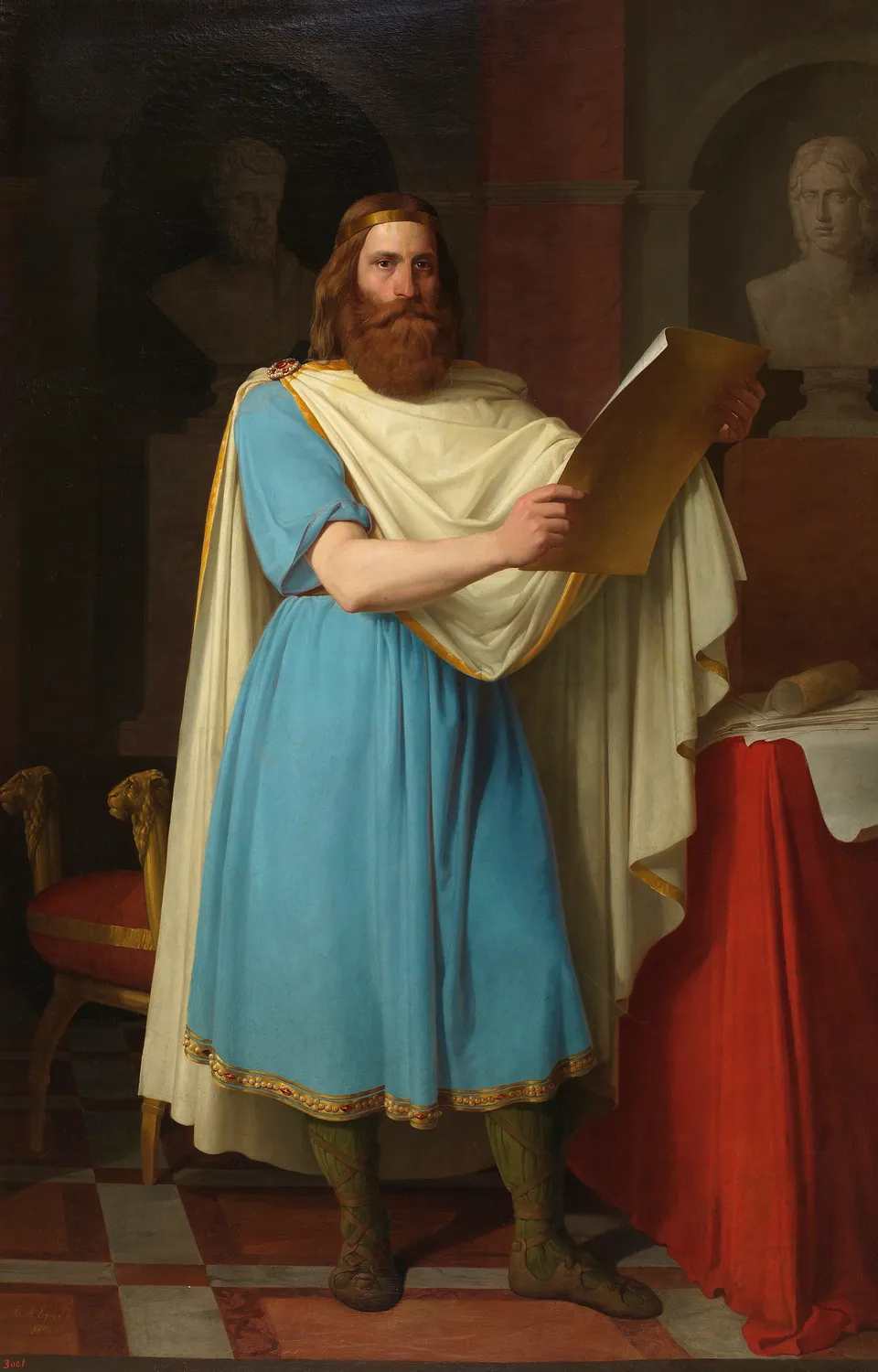
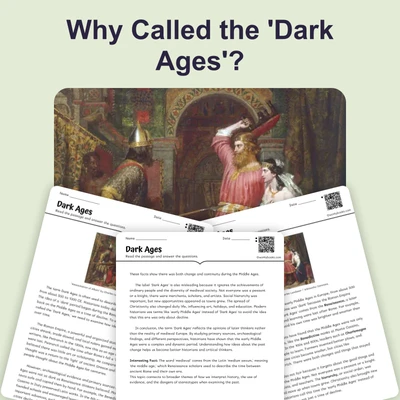
"Alarico II, rey de los Visigodos (Museo del Prado)" by Carlos Esquivel y Rivas / Wikimedia Commons.
In the year 410 CE, the city of Rome was invaded and sacked by the Visigoths, a Germanic people led by their king, Alaric. For hundreds of years, Rome had been the capital of a vast empire and was considered nearly invincible. The sack of Rome marked one of the most dramatic turning points in world history and signaled the weakening of the Western Roman Empire.
The Visigoths had been living on the edges of the Roman Empire for decades. Pressured by the Huns, a powerful group from Central Asia, the Visigoths sought safety inside Roman borders. However, the Romans often treated them harshly and with suspicion. According to the historian Zosimus, the Visigoths were sometimes forced to sell their children into slavery just to survive. Tensions grew until the Visigoths, under Alaric, rebelled against Roman authority and began to march towards Italy.
By 408 CE, Alaric and his army surrounded Rome, demanding gold, silver, and freedom for their people. Despite negotiations, the Roman Senate could not meet Alaric's demands, and after several failed agreements, Alaric's patience ran out. On August 24, 410 CE, the Visigoths entered Rome through the Salarian Gate, which was possibly opened by slaves. For three days, the city was looted. Ancient sources like St. Jerome describe the terror and shock felt across the Roman world. However, some churches, such as St. Peter’s Basilica, were spared, showing a degree of respect for Christian sites. The sack was not complete destruction but still devastated the city and its people.
The impact of the sack was enormous. It was the first time in nearly 800 years that Rome had fallen to a foreign enemy. The event shattered the image of Rome’s invulnerability and signaled that the Western Roman Empire was in serious decline. Many Romans fled the city, and the social hierarchy was disrupted as rich and poor alike suffered from violence and loss. Archaeological evidence, such as layers of destruction in the city's buildings, confirms the widespread damage. The sack also inspired later writers, including St. Augustine, who wrote "The City of God" to explain why such a disaster had happened to the Christian capital of the world.
The sack of Rome by the Visigoths was a turning point in the transition from the ancient world to the Middle Ages. It showed how internal conflict, pressure from outside groups, and political weakness could bring down even the greatest empires. This event connects to broader themes of change, migration, and the fall of civilizations that are important throughout world history.
Interesting Fact: After sacking Rome, Alaric and his followers left the city and soon traveled south, but Alaric died later that year and was reportedly buried with treasure in a riverbed, which has never been found.
Comprehension quiz (8 questions)
1. Who led the Visigoths in 410 CE?
2. What city did the Visigoths sack?
3. In what year did Rome fall to the Visigoths?
4. Why did the Visigoths enter Roman lands?
5. What was spared by the Visigoths?
6. What effect did the sack have?
7. The sack of Rome happened in 410 CE. True or false?
8. What does 'hierarchy' mean?
Perfect for the way you teach
- Build comprehension skills
- Auto-graded quiz
- Differentiated reading
- Read together at home
- Improve fluency
- Quiet reading time
- Reading curriculum support
- Independent practice
- Track Lexile growth