What Are Lunar Maria
Interactive passage with audio narration, comprehension questions, and printable PDF.
By completing this purchase you agree to our Terms of Use and Privacy Policy. Your subscription renews automatically until you cancel. You can cancel anytime from your account settings. All sales are final and non-refundable. Digital content is available for download in your account immediately upon purchase.
What's included
What Are Lunar Maria preview and details
About this printable What Are Lunar Maria science reading passage, NGSS-aligned (Grades 5-8)
Sample passage and quiz from What Are Lunar Maria
Reading passage and comprehension quiz preview
What Are Lunar Maria
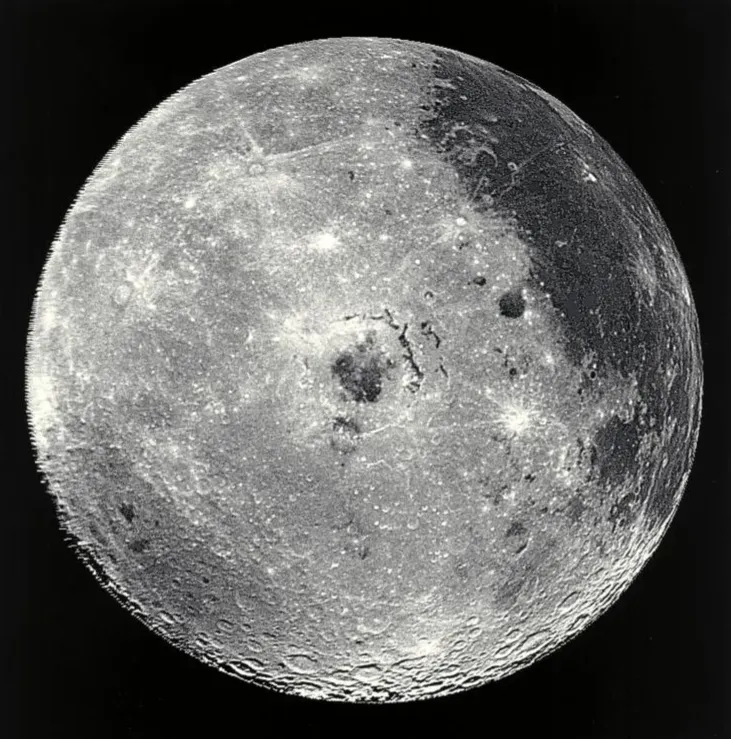
Lunar maria are the dark, smooth plains you can see on the Moon's surface. "ARC-1990-A91-2007" / NASA
Lunar maria are the dark, smooth plains you can see on the Moon's surface. These features look like large, dark patches when you observe the Moon from Earth. Early astronomers believed these dark areas were bodies of water. They called them maria, which means "seas" in Latin. However, scientists now know that no water exists on the Moon's surface.
The maria are actually ancient lava flows that formed billions of years ago. Evidence shows that massive asteroids and comets crashed into the Moon during its early history. These collisions created enormous impact craters that measured hundreds of miles across. The impacts were so powerful that they cracked the Moon's outer layer, called the crust. Molten rock, or magma, then flowed up through these cracks from deep inside the Moon. The magma spread across the crater floors and cooled into solid rock.
Scientists explain that this process took millions of years to complete. The lava that filled the craters was made of dark rock called basalt. Basalt is the same type of rock that forms when volcanoes erupt on Earth. When the lava cooled and hardened, it created the smooth, flat surfaces we see today. The maria appear darker than the surrounding areas because basalt reflects less sunlight than the lighter-colored rocks in the Moon's highlands.
The largest lunar mare is Mare Imbrium, or the "Sea of Rains." This feature spans about 750 miles across. Scientists have studied rock samples from the maria that Apollo astronauts brought back to Earth. These samples show that the maria formed between 3.1 and 3.9 billion years ago. The maria cover about 16 percent of the Moon's total surface. Most maria are located on the side of the Moon that faces Earth.
Understanding lunar maria matters because they reveal important information about the Moon's history. The maria show us that the Moon was once geologically active with volcanic processes. Scientists can study these features to learn how the Moon formed and changed over time. The patterns created by the maria also form the familiar shapes we recognize, such as the "Man in the Moon."
Interesting Fact: The Moon's far side, which we cannot see from Earth, has very few maria. Scientists think this happened because the crust on the far side is thicker, making it harder for lava to reach the surface.
Comprehension quiz (10 questions)
1. What are lunar maria?
2. Why did early astronomers call these features 'maria'?
3. What does the term 'basalt' refer to in the passage?
4. What is an impact crater?
5. Based on the passage, why do maria appear darker than other areas of the Moon?
6. What can scientists learn by studying lunar maria?
7. If a large asteroid struck the Moon today, what would most likely happen based on information in the passage?
8. How might studying lunar maria help scientists understand Earth's geological history?
9. True or False: The maria cover more than half of the Moon's total surface.
10. True or False: The far side of the Moon has fewer maria because its crust is thicker.
Perfect for the way you teach
- Build comprehension skills
- Auto-graded quiz
- Differentiated reading
- Read together at home
- Improve fluency
- Quiet reading time
- Reading curriculum support
- Independent practice
- Track Lexile growth