Reading PassagePremium

What Is a Star System

Interactive passage with audio narration, comprehension questions, and printable PDF.

No ratings yet
Grades 5–8ScienceElaEnglish · SpanishInteractive · Printable
Aligned toMS-ESS1-2
Just this resource
$1.50
One-time purchase
Best value
Unlock everything
$49.99$29.99/yr
40% off until Aug 1 — 10,000+ resources
Renews at $49.99/year.
Unlock above to use these actions

What's included

Reading passage
Audio narration
Comprehension quiz
Writing activity
Glossary & flashcards
Differentiated version
Spanish translation

What Is a Star System preview and details

About this printable What Is a Star System science reading passage, NGSS-aligned (Grades 5-8)

science,ela
Written by Workybooks TeamPublished by Workybooks
Preview

Sample passage and quiz from What Is a Star System

Reading passage and comprehension quiz preview

What Is a Star System?
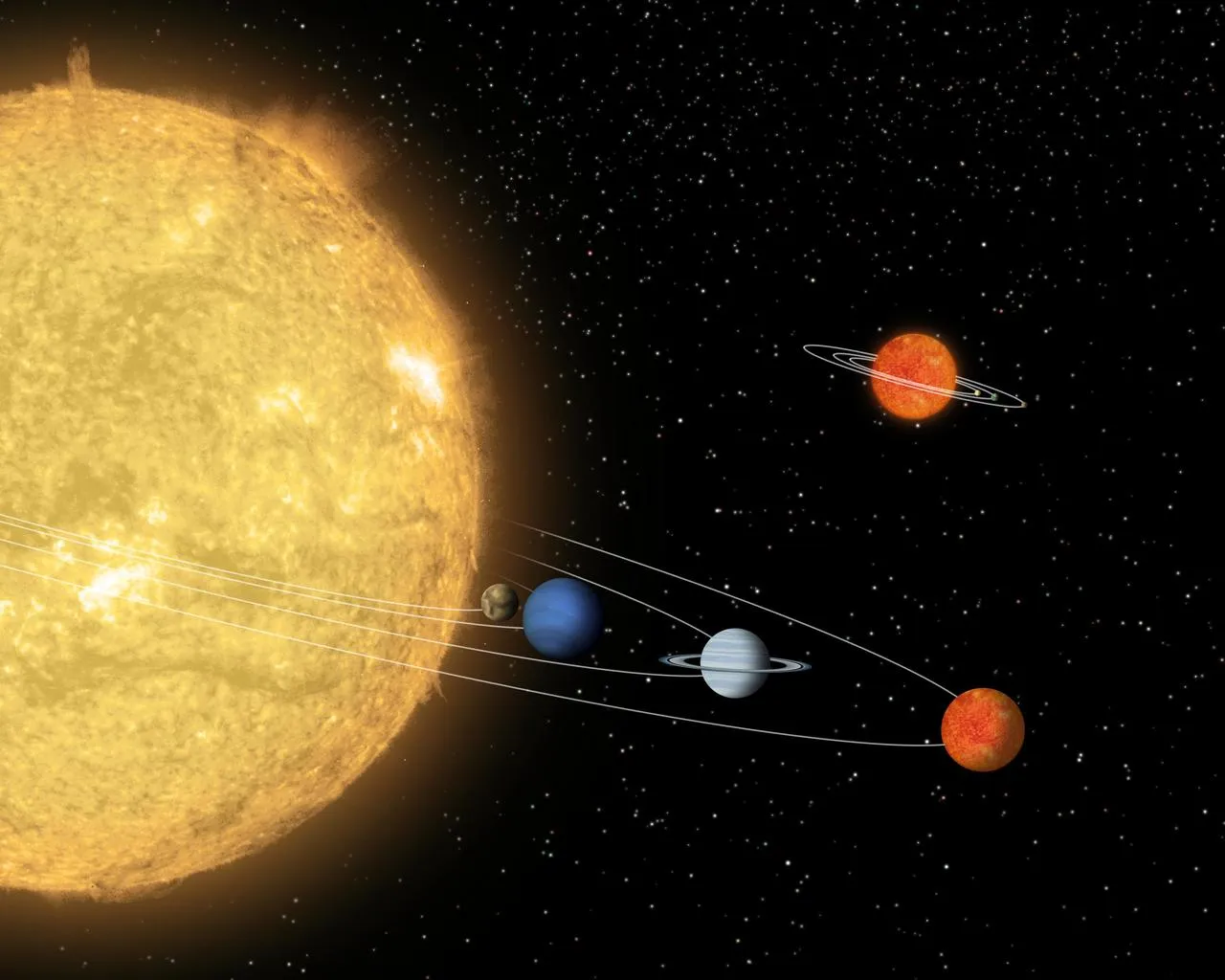
Itsy Bitsy Solar System Artist Concept
A star system is a group of one or more stars and other objects including planets, moons, asteroids, comets, and dust. "Itsy Bitsy Solar System Artist Concept" / NASA.

A star system is a group of one or more stars and all the objects that are gravitationally bound to them. These objects include planets, moons, asteroids, comets, and dust. Our solar system is one example of a star system. It contains one star, the Sun, along with eight planets and their moons. The gravitational force from the Sun holds all these objects in orbit around it.

Scientists explain that not all star systems are like ours. Evidence shows that many star systems contain two or more stars. These are called binary star systems or multiple star systems. In a binary system, two stars orbit around a common center point. The stars are held together by their mutual gravitational attraction. Each star pulls on the other with gravitational force. Planets in these systems may orbit one star, both stars, or follow more complex paths.

The Alpha Centauri system provides a real-world example of a multiple star system. Located about 4.4 light-years from Earth, it contains three stars. Two of the stars orbit each other closely, while a third star orbits farther away. Scientists have discovered that one of these stars has at least one planet. This shows that planets can form and exist in systems with multiple stars.

Understanding star systems matters because it helps scientists learn about how planets form and where life might exist. Most stars in our galaxy are part of multiple star systems rather than single star systems. By studying different types of star systems, scientists can better understand the variety of environments that exist in space. This knowledge helps us understand Earth's place in the universe and the conditions that may support life on other worlds.

Interesting Fact: Some star systems contain six or more stars all orbiting together! The Castor system, visible from Earth, contains six stars that are gravitationally bound to each other.

Comprehension quiz (10 questions)

1. What is a star system?

Only a group of planets orbiting together
One or more stars and all objects gravitationally bound to them
A collection of moons around a single planet
Only binary stars without any planets

2. How many stars does our solar system contain?

Two stars
Three stars
One star
Four stars

3. What does the term 'gravitationally bound' mean in the context of the passage?

Objects that are tied together with ropes
Objects held together by the force of gravity
Objects that are the same size
Objects that glow in the dark

4. In a binary star system, what holds the two stars together?

Magnetic fields
Solar winds
Their mutual gravitational attraction
Cosmic dust

5. Based on the passage, why is studying different types of star systems important?

To learn how to travel faster in space
To understand where life might exist and how planets form
To count all the stars in the universe
To create new star systems

6. How many stars does the Alpha Centauri system contain?

One star
Two stars
Three stars
Six stars

7. What can scientists infer from discovering a planet in the Alpha Centauri system?

Planets cannot form around multiple stars
Only our solar system has planets
Planets can form and exist in systems with multiple stars
All planets are the same size

8. If a new star system were discovered with four stars orbiting each other and several planets, which concept from the passage would best apply?

Binary star system
Solar system
Multiple star system
Single star system

9. True or False: Most stars in our galaxy are part of multiple star systems rather than single star systems.

True
False

10. True or False: In a binary star system, planets can only orbit one of the two stars.

True
False
Who it's for

Perfect for the way you teach

Teachers
  • Build comprehension skills
  • Auto-graded quiz
  • Differentiated reading
Parents
  • Read together at home
  • Improve fluency
  • Quiet reading time
Homeschoolers
  • Reading curriculum support
  • Independent practice
  • Track Lexile growth
Topics

Reviews & Ratings

No reviews yet. Be the first to share your experience!

More reading you might love

20 more
Passage
Comets - reading educational content
Grades 5–8

Comets

science · MS-ESS1-2

$1.50
Passage
Mercury: Closest to the Sun - reading educational content
Grades 5–8

Mercury: Closest to the Sun

science · MS-ESS1-2

$1.50
Passage
Venus: Earth's Twin? - reading educational content
Grades 5–8

Venus: Earth's Twin?

science · MS-ESS1-2

$1.50
Passage
Earth: Our Home Planet - reading educational content
Grades 5–8

Earth: Our Home Planet

science · MS-ESS1-2

Free
Passage
Mars: The Red Planet - reading educational content
Grades 5–8

Mars: The Red Planet

science · MS-ESS1-2

$1.50
Passage
Kepler's Laws of Planetary Motion - reading educational content
Grades 5–8

Kepler's Laws of Planetary Motion

science · MS-ESS1-2

$1.50
Passage
Tides and Tidal Forces - reading educational content
Grades 5–8

Tides and Tidal Forces

science · MS-ESS1-1

$1.50
Passage
Escape Velocity and Space Travel - reading educational content
Grades 5–8

Escape Velocity and Space Travel

science · MS-ESS1-2

$1.50
Passage
Weightlessness and Microgravity - reading educational content
Grades 5–8

Weightlessness and Microgravity

science · MS-PS2-4

$1.50
Passage
Orbits and Orbital Motion - reading educational content
Grades 5–8

Orbits and Orbital Motion

science · MS-ESS1-2

$1.50
Passage
What Is the Solar System? - reading educational content
Grades 5–8

What Is the Solar System?

science · MS-ESS1-2

$1.50
Passage
Structure of the Solar System - reading educational content
Grades 5–8

Structure of the Solar System

science · MS-ESS1-2

$1.50
Passage
Moons of the Solar System - reading educational content
Grades 5–8

Moons of the Solar System

science · MS-ESS1-2

Free
Passage
Defining Life: What Are We Looking For? - reading educational content
Grades 5–8

Defining Life: What Are We Looking For?

science · MS-LS1-1

$1.50
Passage
 Astronomy - reading educational content
Grades 5–8

Astronomy

earth science · MS-ESS1-2

$1.50
Passage
The Solar System - reading educational content
Grades 5–8

The Solar System

science · MS-ESS1-2

$1.50
Passage
Gravity and Orbits - reading educational content
Grades 5–8

Gravity and Orbits

science · MS-ESS1-2

$1.50
Passage
The Inner Planets - reading educational content
Grades 5–8

The Inner Planets

science · MS-ESS1-2

$1.50
Passage
The Outer Planets - reading educational content
Grades 5–8

The Outer Planets

science · MS-ESS1-2

$1.50
Passage
The Moon's Characteristics - reading educational content
Grades 5–8

The Moon's Characteristics

science · MS-ESS1-1

$1.50
Copyright © 2026 Workybooks. Made with ♥ in California.