What Is Deep Time
Interactive passage with audio narration, comprehension questions, and printable PDF.
By completing this purchase you agree to our Terms of Use and Privacy Policy. Your subscription renews automatically until you cancel. You can cancel anytime from your account settings. All sales are final and non-refundable. Digital content is available for download in your account immediately upon purchase.
What's included
What Is Deep Time preview and details
About this printable What Is Deep Time science reading passage, NGSS-aligned (Grades 5-8)
Sample passage and quiz from What Is Deep Time
Reading passage and comprehension quiz preview
What Is Deep Time
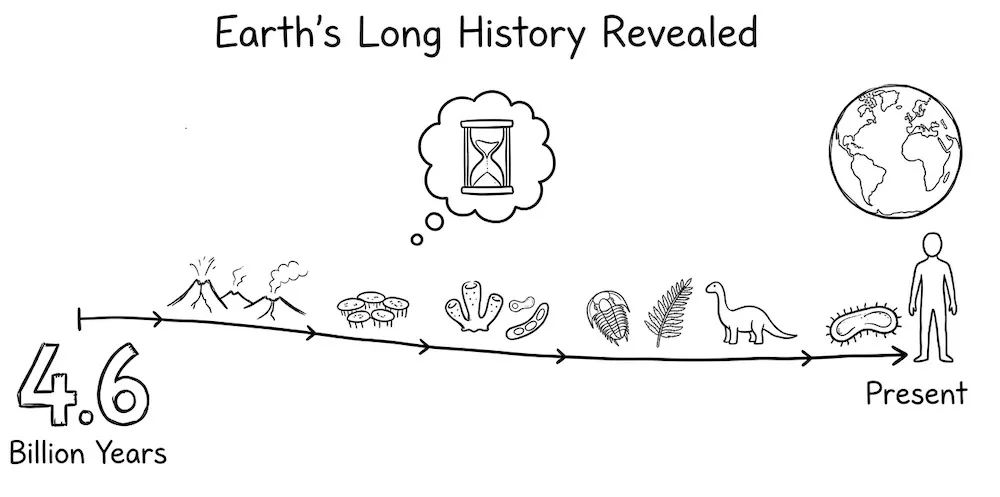
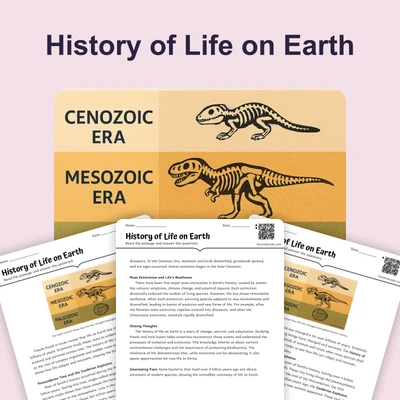
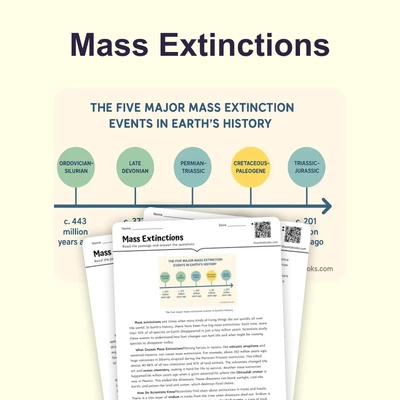
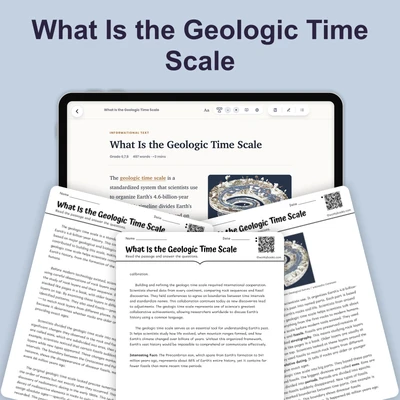
Deep time is the concept that Earth has an incredibly long history spanning 4.6 billion years. This vast timescale is far beyond what humans can easily imagine. Our entire species has existed for only about 300,000 years. Scientists use the term deep time to describe the enormous age of Earth.
Understanding deep time requires thinking in ways that stretch our imagination. Scientists often use analogies to make this concept clearer. If Earth's entire history fit into one calendar year, the planet would form on January 1. The first simple life would appear in March. Dinosaurs would roam Earth in mid-December. All of human history would occur in the last 30 seconds before midnight on December 31. This comparison shows how recent humans are in Earth's long story.
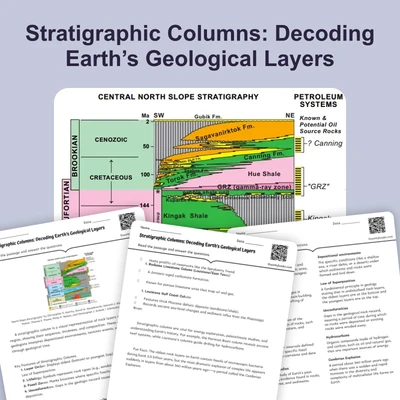
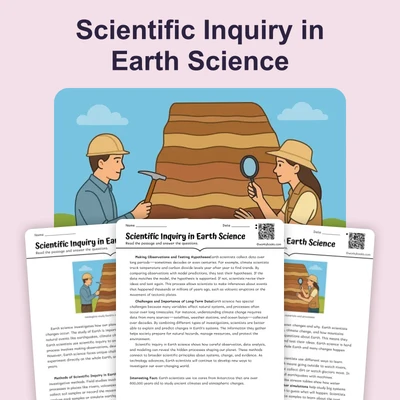
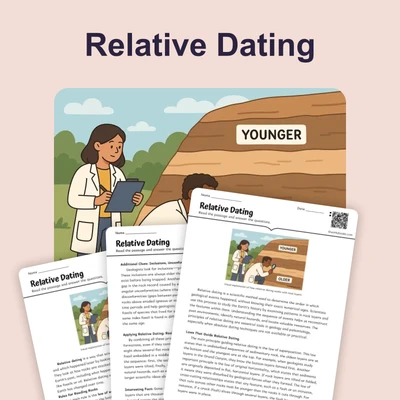
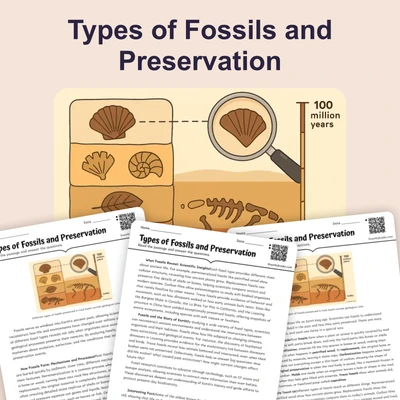
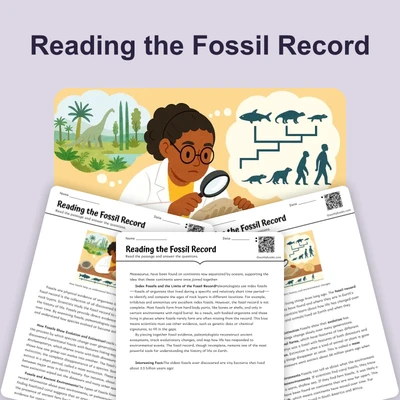
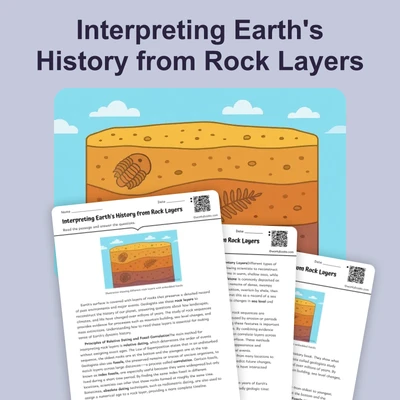
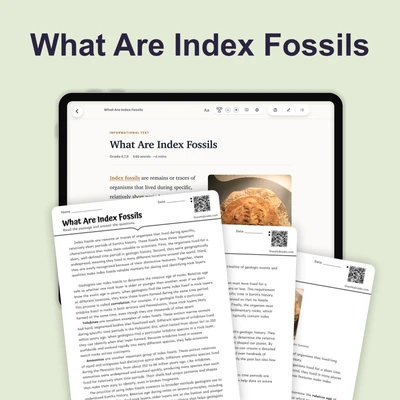
Evidence for deep time comes from studying rocks and fossils. Scientists observe layers of rock called strata that formed over millions of years. Each layer represents a different time period in Earth's past. Radioactive dating allows scientists to measure the age of rocks by examining elements that decay at known rates. Fossils preserved in these layers show how life changed over time. The fossil record reveals that simple organisms appeared first, and complex life developed gradually over billions of years.
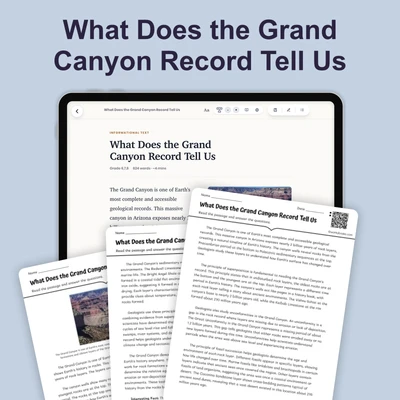
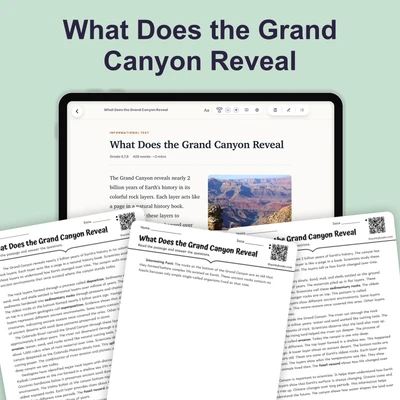
The Grand Canyon provides a clear example of deep time. The Colorado River carved through rock layers over millions of years. The oldest rocks at the canyon bottom are nearly 2 billion years old. The youngest rocks at the top formed about 270 million years ago. Visitors can see this geologic history displayed in colorful bands of rock. Each layer tells part of Earth's story.
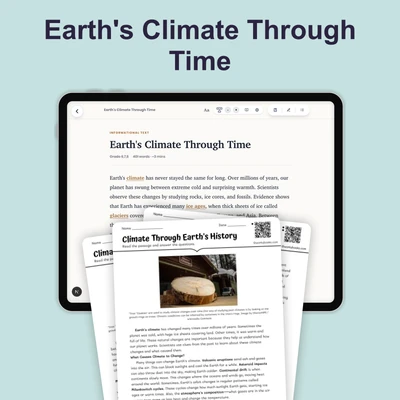
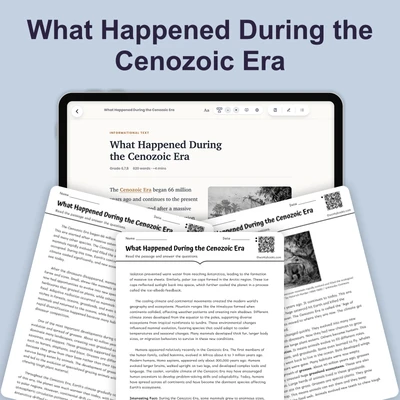
Deep time matters because it helps explain how Earth's surface changed through slow processes. Mountains rise and erode over millions of years. Continents drift across the planet's surface through plate tectonics. Species evolve and adapt to changing environments. Without understanding deep time, these gradual changes would seem impossible. The concept of geologic time allows scientists to explain how small changes add up to create the world we see today.
Interesting Fact: If you represented Earth's 4.6-billion-year history as a 24-hour clock, modern humans would appear just 4 seconds before midnight!
Comprehension quiz (10 questions)
1. How old is Earth according to the passage?
2. In the calendar year analogy, when would all of human history occur?
3. What does the term 'strata' refer to in the passage?
4. What method do scientists use to measure the age of rocks?
5. Based on the passage, what does the fossil record reveal about life on Earth?
6. How do the rock layers at the Grand Canyon demonstrate deep time?
7. Why is understanding deep time important for explaining Earth's changes?
8. What process causes continents to drift across Earth's surface?
9. True or False: Humans have existed for most of Earth's 4.6-billion-year history.
10. True or False: Each layer of rock in the Grand Canyon represents a different time period in Earth's past.
Perfect for the way you teach
- Build comprehension skills
- Auto-graded quiz
- Differentiated reading
- Read together at home
- Improve fluency
- Quiet reading time
- Reading curriculum support
- Independent practice
- Track Lexile growth