Why Oceans Hold Most Water
Interactive passage with audio narration, comprehension questions, and printable PDF.
By completing this purchase you agree to our Terms of Use and Privacy Policy. Your subscription renews automatically until you cancel. You can cancel anytime from your account settings. All sales are final and non-refundable. Digital content is available for download in your account immediately upon purchase.
What's included
Why Oceans Hold Most Water preview and details
About this printable Why Oceans Hold Most Water science reading passage, NGSS-aligned (Grades 5-8)
Sample passage and quiz from Why Oceans Hold Most Water
Reading passage and comprehension quiz preview
Why Oceans Hold Most Water
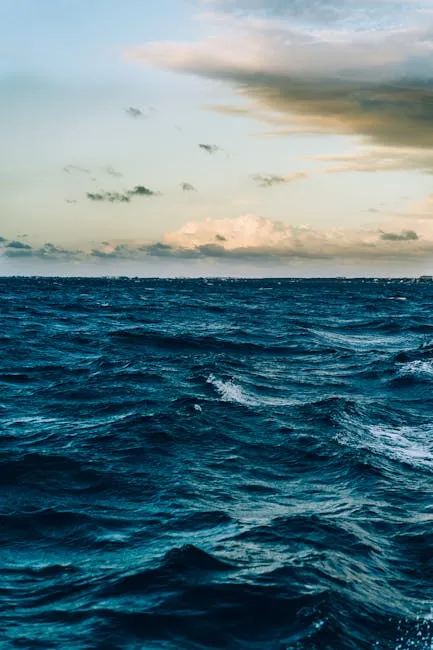
Oceans hold 97% of Earth's water because they occupy the lowest places on our planet. Image by Ricky Esquivel / Pexels.
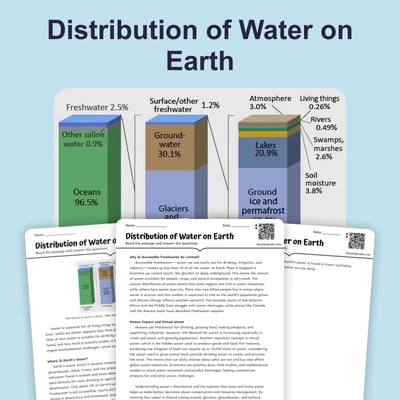
Oceans hold 97% of Earth's water because they occupy the lowest places on our planet. Water naturally flows downhill due to gravity. Over billions of years, water has collected in ocean basins, which are huge depressions in Earth's crust. These basins cover 71% of Earth's surface and average about 12,000 feet deep.
The depth and size of ocean basins explain their enormous water capacity. Evidence shows that ocean basins formed through geological processes that created low areas in Earth's crust. When rain falls on land, rivers carry water downhill toward the ocean. This process has continued for billions of years. The Pacific Ocean alone holds about half of all ocean water because it is both wide and deep. Scientists observe that the Pacific basin extends across nearly one-third of Earth's surface.
Salt concentration in oceans developed over geological time through natural processes. Rivers dissolve minerals from rocks as they flow across land. These dissolved minerals, including salt, reach the ocean. Water evaporates from the ocean surface, but salt remains behind. This cycle has repeated for billions of years. The hydrosphere includes all water on Earth, but oceans contain most of it.
Understanding ocean water distribution helps scientists explain Earth's water cycle and climate patterns. Oceans store heat and influence weather systems across the planet. The vast amount of water in ocean basins affects sea level, coastal environments, and marine ecosystems. When scientists study climate change, they examine how ocean water temperatures and volumes may shift. Ocean basins serve as Earth's primary water reservoirs because gravity pulls water to the lowest elevations. The shape and depth of these basins determine how much water they can hold.
Interesting Fact: If you could drain all the water from the Pacific Ocean, the Mariana Trench would be visible as a canyon deeper than Mount Everest is tall—nearly 36,000 feet below sea level!
Comprehension quiz (10 questions)
1. What percentage of Earth's water do oceans hold?
2. Why does water collect in ocean basins?
3. What percentage of Earth's surface do ocean basins cover?
4. What does the term 'hydrosphere' mean in the passage?
5. According to the passage, what is the term for large depressions in Earth's crust that hold ocean water?
6. Why does ocean water contain salt?
7. Which ocean holds about half of all ocean water?
8. Based on the passage, what can scientists learn by studying ocean water distribution?
9. Ocean basins formed through geological processes over billions of years.
10. When water evaporates from the ocean, salt also evaporates with it.
Perfect for the way you teach
- Build comprehension skills
- Auto-graded quiz
- Differentiated reading
- Read together at home
- Improve fluency
- Quiet reading time
- Reading curriculum support
- Independent practice
- Track Lexile growth