
Passage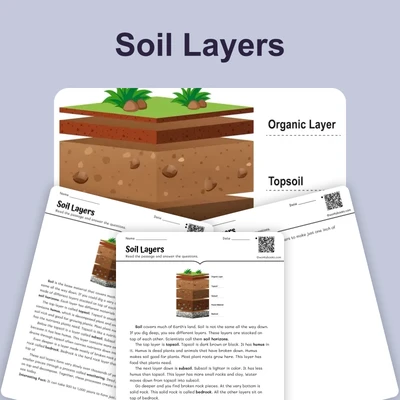
Grades 3–5
Soil Layers
Reading Passage · NGSS 4-ESS2-1
$1.50

Explore our collection of Rocks and Minerals curriculum resources for grades K to 8. This hub includes worksheets, reading passages, games, and activities that build student understanding of minerals, rocks, the rock cycle, and soil. Whether you need no-prep printables or engaging digital activities, you will find teacher-authored, standards-aligned materials here.
Reading Passage · NGSS 4-ESS2-1
Reading Passage · NGSS 4-ESS2-1
Reading Passage · NGSS 4-ESS2-1
Reading Passage · MS-ESS2-2
Reading Passage · MS-ESS2-2
Reading Passage · MS-ESS2-1
40% off until Aug 1
Reading Passage
Reading Passage
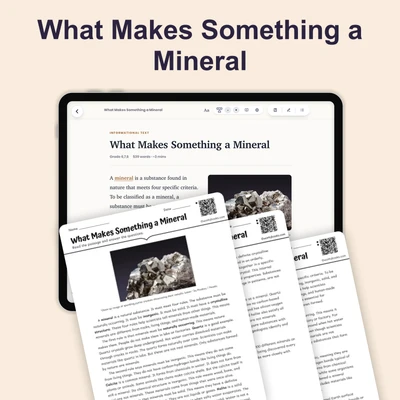
Reading Passage · MS-ESS3-1
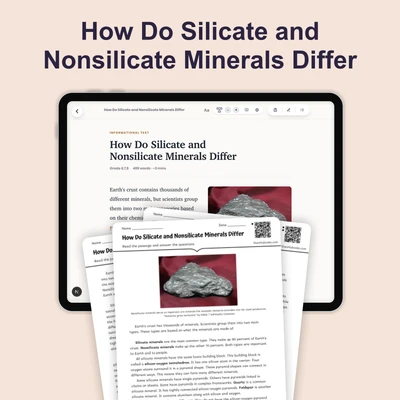
Reading Passage · MS-ESS3-1
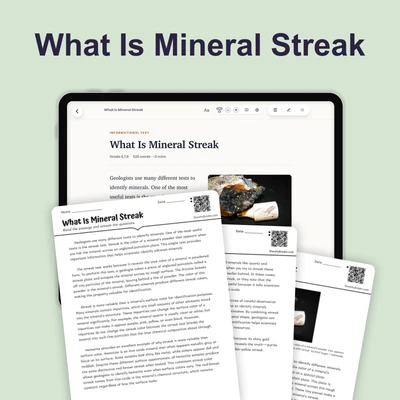
Reading Passage · MS-ESS3-1
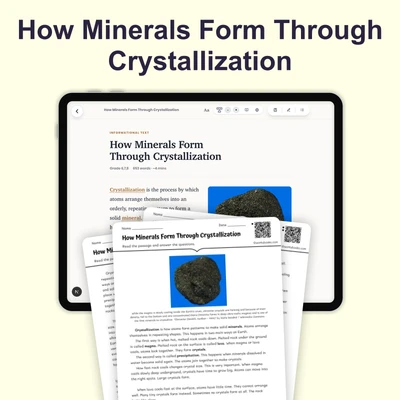
Reading Passage · MS-ESS2-1
Reading Passage · MS-ESS2-1
40% off until Aug 1
Reading Passage · MS-ESS3-1
Reading Passage · MS-ESS3-1
Reading Passage · MS-ESS2-1
Reading Passage · MS-ESS2-1
Reading Passage · MS-ESS2-1
Reading Passage · MS-ESS2-1
Reading Passage · MS-ESS2-1
Reading Passage · MS-ESS2-1
Three ways to use Workybooks — pick what fits.
In the earliest grades, students explore the properties of minerals and simple rock types through hands-on observation and sorting activities. As they progress, they learn to classify rocks as igneous, sedimentary, or metamorphic and begin to understand the rock cycle. By upper elementary, students connect these concepts to soil formation and the role of weathering and erosion. Our resources scaffold this progression, offering differentiated activities that build from basic identification to interpreting diagrams of the rock cycle and analyzing soil composition.
Related concepts covered include Mohs hardness scale, mineral streak, luster, cleavage, fossil formation, and the three main rock types. The subtopics of minerals, rocks, rock cycle, and soil are woven together so students see the big picture of Earth's materials. Activities range from graphic organizers and cut-and-paste sorts to reading passages with comprehension questions and interactive digital games. Some resources are free, while most are available with a Workybooks membership.
Teachers can use this hub to find resources that fit any instructional setting. For whole-group lessons, project a digital reading passage or interactive rock cycle diagram. In small groups, students can work on differentiated worksheets or play a rock classification game. Use the printable worksheets for independent practice, homework, or assessment. For literacy centers, pair a leveled reader with a graphic organizer. Intervention groups can revisit foundational concepts with scaffolded activities, while advanced students tackle more complex soil analysis. Mix printable and digital resources to meet the needs of a mixed-ability classroom, and use the search filters to quickly find the right grade level and topic.
These resources are aligned with grade-level Common Core standards for reading informational text and writing, as well as Next Generation Science Standards for Earth science across K-5 and middle school. They support skills such as describing, comparing, and analyzing Earth materials.
Yes, many of our Rocks and Minerals worksheets are printable. You can download and print them for classroom use. Some resources are also available in digital format for use on devices. Note that most resources require a membership, though some are free.
Yes, our Rocks and Minerals worksheets for kids span kindergarten through 8th grade. Each resource is labeled with the appropriate grade level, so you can easily find materials that match your students' abilities. The content progresses from basic mineral properties to the rock cycle and soil science.
In addition to worksheets, this hub includes reading passages with comprehension questions, interactive digital games, graphic organizers, hands-on activity ideas, and assessment tools. You will find a mix of printable and digital resources to support different learning styles.
Each resource includes a grade range and skill level. You can assign simpler identification activities to struggling students and more complex rock cycle diagrams or soil analysis to advanced learners. The variety of formats allows you to use the same topic with different levels of support, such as a cut-and-paste sort for beginners and a written explanation for more proficient students.