Compass Navigation
Interactive passage with audio narration, comprehension questions, and printable PDF.
By completing this purchase you agree to our Terms of Use and Privacy Policy. Your subscription renews automatically until you cancel. You can cancel anytime from your account settings. All sales are final and non-refundable. Digital content is available for download in your account immediately upon purchase.
What's included
Compass Navigation preview and details
About this printable Compass Navigation science reading passage, NGSS-aligned (Grades 5-8)
Sample passage and quiz from Compass Navigation
Reading passage and comprehension quiz preview
Compasses and Navigation
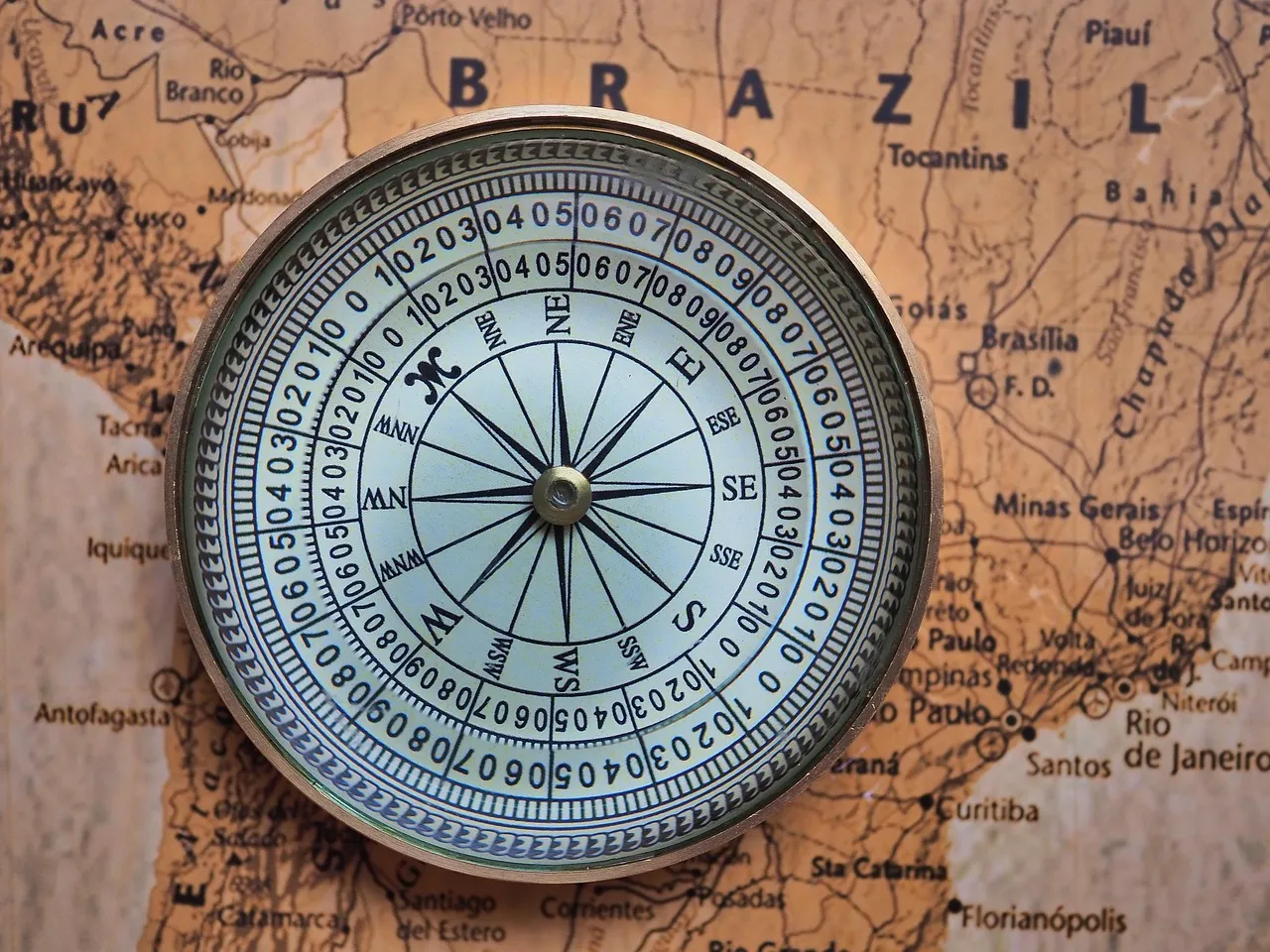
"Compasses revolutionized navigation, enabling travel without landmarks." Image by beasternchen / Pixabay.
Compasses are essential tools for finding direction and have played a key role in exploration and navigation for hundreds of years. A compass needle always points toward magnetic north, not true north, because it aligns with Earth’s magnetic field. Understanding how and why compasses work can help us see their importance—not just in the past, but in today’s world where GPS and digital maps have become common.
How Compasses Work: The Science of Magnetism
A compass contains a small, lightweight magnet called the needle. This needle is free to rotate on a pivot. Earth itself acts like a giant magnet, with invisible lines of force called magnetic field lines stretching between its magnetic north and south poles. The compass needle aligns with these field lines, so one end always points toward Earth’s magnetic north pole. However, Earth’s magnetic north is not the same as its geographic north pole. The difference between these is known as magnetic declination, which varies depending on where you are in the world. For example, in New York City, the compass points about 13 degrees west of true north. Pilots and navigators must adjust for magnetic declination to avoid getting off course.
Historical and Modern Uses of Compasses
Compasses changed history by allowing sailors and travelers to navigate across oceans and deserts, even when there were no landmarks. They were vital for trade routes, exploration, and migration. Today, we often use Global Positioning System (GPS) devices, which use satellites to give precise locations. But compasses remain valuable, especially when electronic devices fail or batteries die. Hikers, pilots, and scientists still use compasses for reliable direction-finding. Modern compasses may include features like adjustable declination settings, sighting mirrors, and luminous dials for night use.
Using a Compass: Reading and Applications
To use a compass, hold it flat and steady. The needle will settle and point north. The rotating compass housing is marked with degrees from 0° to 360°, allowing users to measure bearings and navigate with a map. To account for declination, users must add or subtract the local declination value from their bearing. Accurate use of a compass requires practice and knowledge of local magnetic variation. Compasses are also used in scientific research, such as studying animal migration, since many species use Earth’s magnetic field to navigate.
Understanding compasses connects to broader scientific principles: it’s an example of how physical forces like magnetism shape technology and society. Compasses are a simple yet powerful tool showing how science helps us solve real-world problems.
Interesting Fact: Earth’s magnetic field is constantly changing; the magnetic north pole has moved nearly 990 kilometers (over 600 miles) in the past 200 years!
Comprehension quiz (10 questions)
1. What does a compass needle align with to show direction?
2. What is the main difference between magnetic north and true north?
3. Why must navigators adjust for magnetic declination?
4. Which device uses satellites to provide precise locations on Earth?
5. What is magnetic declination?
6. In the passage, what does the compass housing do?
7. What is an example of a modern use of a compass mentioned in the passage?
8. Which is NOT a feature of some modern compasses?
9. True or False: Magnetic north and true north are always the same place.
10. True or False: Compasses are still useful today, even with GPS technology.
Perfect for the way you teach
- Build comprehension skills
- Auto-graded quiz
- Differentiated reading
- Read together at home
- Improve fluency
- Quiet reading time
- Reading curriculum support
- Independent practice
- Track Lexile growth