This learning resource is available in interactive and printable formats. The interactive worksheet can be played online and assigned to students. The Printable PDF version can be downloaded and printed for completion by hand.
This passage introduces middle school students to electric generators, explaining the physical science behind how mechanical energy is transformed into electrical energy through electromagnetic induction. Aligned with NGSS MS-PS2-3 and MS-PS3-5, the passage details the mechanisms of generator operation, including the role of coils, magnets, and turbines. It explores the practical use of generators in hydroelectric, wind, and fossil fuel power plants, and clarifies the difference between alternating current (AC) and direct current (DC). The passage provides scientific evidence and real-life examples, integrates a glossary, and supports audio integration for accessibility. Activities include a quiz, writing prompts, and graphic organizers to strengthen understanding and application of key science concepts.
Electric generators are machines that power our homes, schools, and cities by turning mechanical energy into electrical energy. When you see lights turn on or feel the hum of appliances, you're witnessing the result of this powerful transformation. Understanding how generators work is key to knowing how modern society produces and uses electricity.
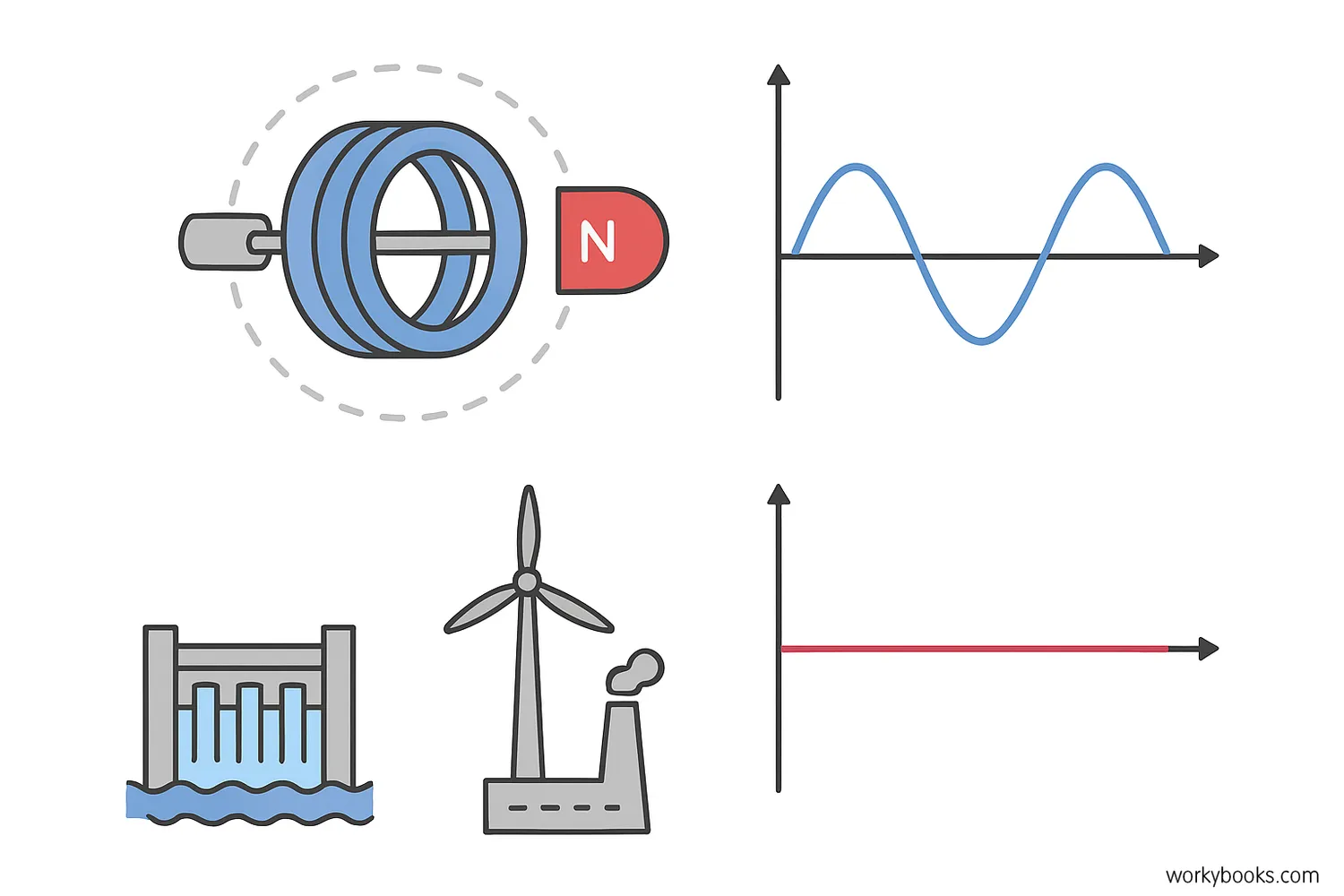
How Do Electric Generators Work? At the heart of every electric generator is a process called electromagnetic induction. In this process, a coil of wire spins inside a magnetic field, or a magnet moves near a coil. This movement causes electrons in the wire to move, creating an electric current. The amount of electricity generated depends on how fast the coil moves, the number of loops in the coil, and the strength of the magnetic field. For example, a generator in a wind turbine spins when wind turns its blades, while a hydroelectric generator spins when water flows over a turbine. Both systems use mechanical energy from moving air or water to turn the coil inside the magnetic field, producing electricity through electromagnetic induction. Larger power plants use steam produced by burning coal, natural gas, or using nuclear reactions to spin turbines connected to generators. No matter the energy source, the basic mechanism remains the same: mechanical motion becomes electrical energy.
Real-World Applications and Types of Current Generators are used in many settings, from small backup generators in homes to massive power stations that supply cities. Most power plants produce alternating current (AC), where the direction of the electric current changes rapidly—usually 60 times per second in the United States. AC is efficient for sending electricity over long distances. Some devices, like batteries, produce direct current (DC), where the current flows in only one direction. While AC is standard in homes and businesses, DC is used in electronics such as laptops and cell phones. Special devices called rectifiers can change AC into DC so these devices can work.
Broader Implications and Scientific Connections Electric generators play a critical role in sustainable energy solutions. For example, wind and hydroelectric generators can produce electricity without emitting greenhouse gases, helping to reduce environmental impact. The science behind generators is based on the interaction between forces and energy transfer, connecting to larger scientific principles about how energy changes form but is never lost. This understanding has led to innovations in power generation, from more efficient turbines to new energy storage systems for renewable sources.
Electric generators demonstrate how scientific discoveries can change the world, providing clean, reliable power for billions of people. As technology advances, the principles of electromagnetic induction and energy transformation remain at the core of how we produce and use electricity.
Interesting Fact: Some of the world’s largest generators, like those in the Three Gorges Dam in China, can produce more than 20,000 megawatts of electricity—enough to power millions of homes.
What is the main function of an electric generator?
To convert mechanical energy into electrical energyTo store electrical energy for later useTo turn electrical energy into heatTo create mechanical energy from electricity
Which process do generators use to create electricity?
What causes the coil in a generator to spin in a wind turbine?
Flowing waterBurning coalMoving windSunlight
In the passage, what is the role of a rectifier?
It changes AC into DC for use in electronicsIt stores energy in a batteryIt spins the turbine in a power plantIt increases the strength of the magnetic field
According to the passage, which type of current is standard in homes and businesses?
Direct current (DC)Alternating current (AC)Static electricityThermal current
What does the term 'energy transfer' mean as used in the passage?
Moving energy from one place or form to anotherChanging electricity into heatStopping the flow of electronsBreaking apart atoms
Why are wind and hydroelectric generators important for the environment?
They do not emit greenhouse gasesThey increase air pollutionThey require burning fossil fuelsThey use sunlight for power
If a generator’s coil spins faster, what happens to the amount of electricity produced?
It decreasesIt stays the sameIt increasesIt stops completely
True or False: All generators produce electricity using the same basic mechanism of spinning a coil in a magnetic field.
TrueFalse
True or False: Direct current (DC) changes direction many times per second.
TrueFalse
Perfect For:
👩🏫 Teachers
• Reading comprehension practice
• Auto-graded assessments
• Literacy skill development
👨👩👧👦 Parents
• Reading practice at home
• Comprehension improvement
• Educational reading time
🏠 Homeschoolers
• Reading curriculum support
• Independent reading practice
• Progress monitoring
Reading Features:
📖
Reading Passage
Engaging fiction or nonfiction text
❓
Comprehension Quiz
Auto-graded questions
📊
Instant Feedback
Immediate results and scoring
📄
Printable Version
Download for offline reading
🔊
Read Aloud
Voice-over with word highlighting
Reviews & Ratings
No reviews yet. Be the first to share your experience!
Related Content
Types of Magnets
This science passage for grades 6-8 explains the types of magnets—permanent, temporary, natural, and briefly electromagn...
MS-PS2-3
Magnetic Materials
This passage, aligned to NGSS standard MS-PS2-3, explores the science behind magnetic materials and their importance in ...
MS-PS2-3
What Is Electricity?
This middle school science passage introduces the concept of electricity, aligned with NGSS standard MS-PS2-3. Students ...
MS-PS2-3
Electric Charge
This comprehensive middle school science passage introduces the concept of electric charge as a fundamental property of ...
MS-PS2-3
How Charges Interact
This standards-aligned passage for grades 6-8 introduces students to how electric charges interact, focusing on the fund...
MS-PS2-3MS-PS2-5
Electric Current
This comprehensive middle school science passage, aligned with NGSS standard MS-PS2-3, introduces students to the concep...
MS-PS2-3
Electric Circuits
This middle school science passage explores electric circuits in depth, aligning with NGSS standard MS-PS2-3. Students w...
MS-PS2-3
Series and Parallel Circuits
This informative passage for grades 6-8 explains the scientific mechanisms behind series and parallel electrical circuit...
MS-PS2-3
Electrical Safety
This comprehensive informational passage for grades 6-8 explores the science behind electrical safety, focusing on the m...
MS-PS2-3
Voltage
This comprehensive passage for grades 6-8 explores the concept of voltage, defined as the electrical potential differenc...
MS-PS2-3
Resistance
This engaging middle school science passage explores the concept of resistance, a fundamental idea in the study of elect...
MS-PS2-3
Static Electricity
This passage provides a comprehensive exploration of static electricity, aimed at students in grades 6-8 and aligned wit...
MS-PS2-3MS-PS2-5
Electricity and Magnetism Connection
This comprehensive science passage for grades 6-8 explores the deep connection between electricity and magnetism, beginn...
MS-PS2-3MS-PS2-5
Electromagnets
This middle school science passage introduces students to electromagnets, aligning with NGSS standard MS-PS2-3. It cover...
MS-PS2-3
Uses of Electromagnets
This engaging middle school science passage explores the uses of electromagnets, aligned with NGSS standard MS-PS2-3. St...
MS-PS2-3
Electromagnetic Induction
This middle school science reading passage explores the concept of electromagnetic induction, focusing on Faraday's grou...
MS-PS2-3MS-PS3-5
Electric Motor
This comprehensive middle school science passage explores the science of electric motors, aligning with NGSS standards M...
MS-PS2-3MS-PS3-5
How Transformers Work
This middle school science passage explores the science of transformers—devices that change the voltage of electricity u...
MS-PS2-3
Strength of Electromagnets
This middle school science passage explores the factors that affect the strength of electromagnets, including the number...
MS-PS2-3
Magnetic Force
This comprehensive science passage for grades 6-8 explores the mechanisms behind magnetic force, including how magnet st...