Science · Curriculum resources

Earth's Resources Worksheets and Activities

Explore our collection of Earth's Resources curriculum resources for grades K-5. This hub offers worksheets, activities, reading passages, games, and graphic organizers that build understanding of natural resources, conservation, and human impact across the elementary grade span.

Passage
How Do Uranium Deposits Form - reading educational content
Grades 6–8

How Do Uranium Deposits Form

Reading Passage · MS-ESS3-1

$1.50

Passage
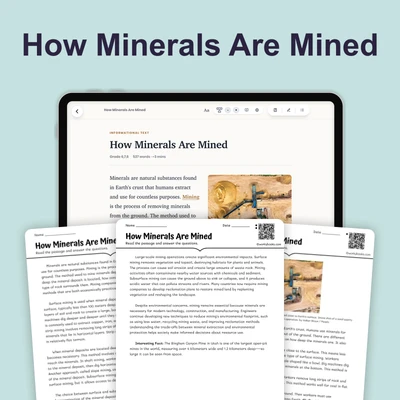
How Minerals Are Mined - reading educational content
Grades 6–8

How Minerals Are Mined

Reading Passage · MS-ESS3-1

$1.50
Passage
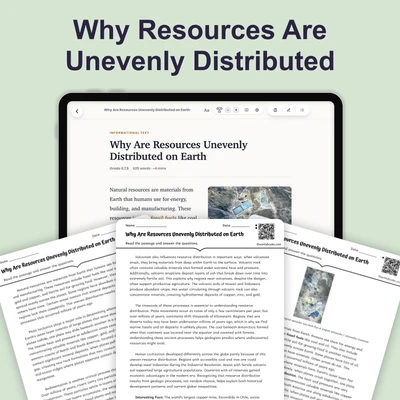
Why Are Resources Unevenly Distributed on Earth - reading educational content
Grades 6–8

Why Are Resources Unevenly Distributed on Earth

Reading Passage · MS-ESS3-1

$1.50
Passage
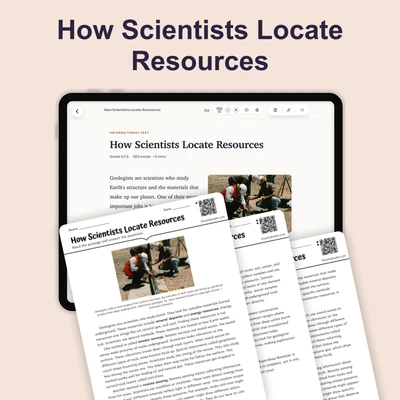
How Do Scientists Locate Underground Resources - reading educational content
Grades 6–8

How Do Scientists Locate Underground Resources

Reading Passage · MS-ESS3-1

$1.50
Passage
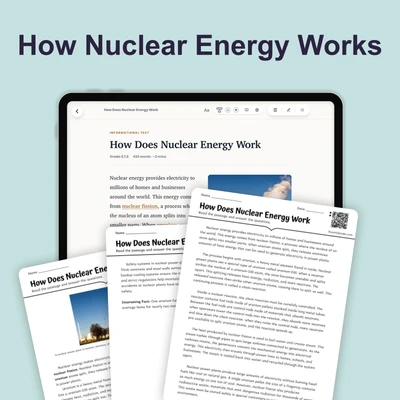
How Does Nuclear Energy Work - reading educational content
Grades 6–8

How Does Nuclear Energy Work

Reading Passage · MS-ESS3-1

$1.50
Passage
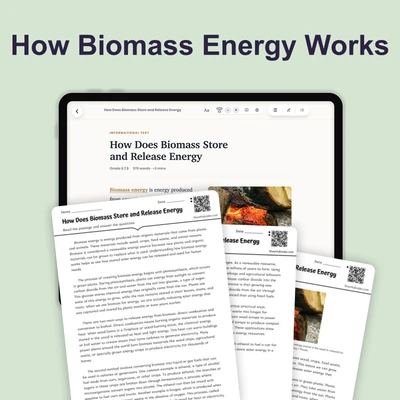
How Does Biomass Store and Release Energy - reading educational content
Grades 6–8

How Does Biomass Store and Release Energy

Reading Passage · MS-ESS3-1

$1.50
Unlock more from Workybooks
Unlimited
$29.99/yr$49.99
  • All 10,000+ resources
  • Unlimited downloads
  • Cancel anytime
Or pay as you goFrom $1.50
See all plans

40% off until Aug 1

Passage
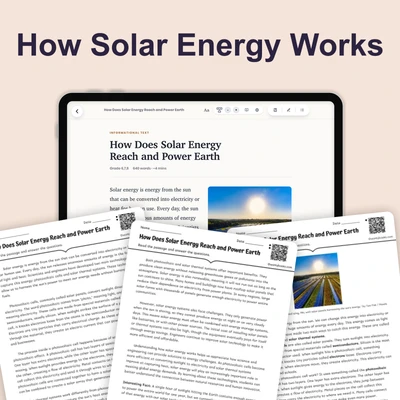
How Does Solar Energy Reach and Power Earth - reading educational content
Grades 6–8

How Does Solar Energy Reach and Power Earth

Reading Passage · MS-ESS3-1

$1.50
Passage
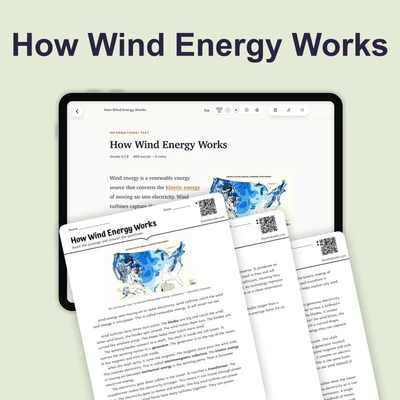
How Does Wind Energy Work - reading educational content
Grades 6–8

How Does Wind Energy Work

Reading Passage · MS-ESS3-1

$1.50
Passage
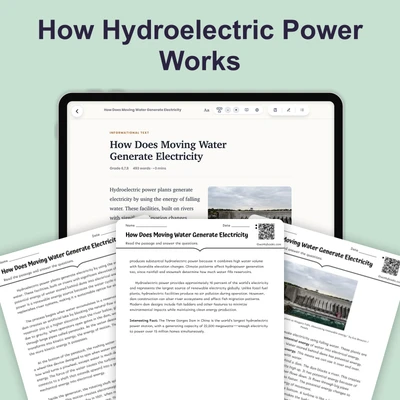
How Does Moving Water Generate Electricity - reading educational content
Grades 6–8

How Does Moving Water Generate Electricity

Reading Passage · MS-ESS3-1

$1.50
Passage
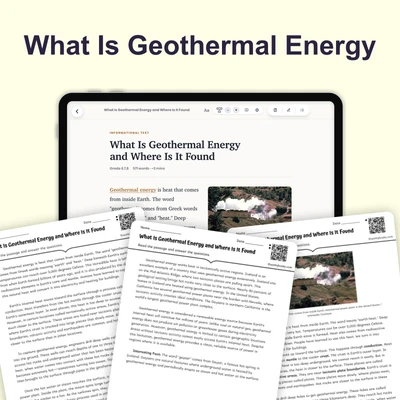
What Is Geothermal Energy and Where Is It Found - reading educational content
Grades 6–8

What Is Geothermal Energy and Where Is It Found

Reading Passage · MS-ESS3-1

$1.50
Passage
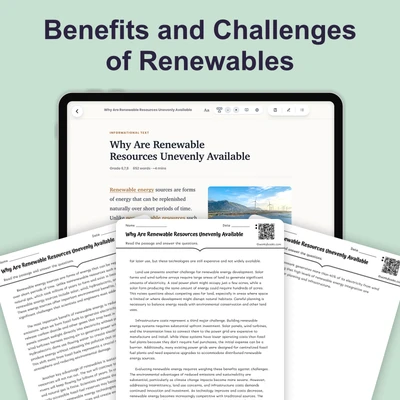
Why Are Renewable Resources Unevenly Available - reading educational content
Grades 6–8

Why Are Renewable Resources Unevenly Available

Reading Passage · MS-ESS3-1

$1.50
Passage
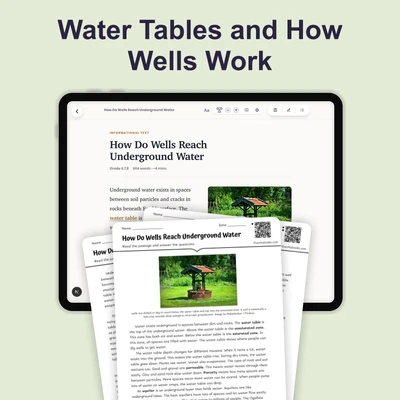
How Do Wells Reach Underground Water - reading educational content
Grades 6–8

How Do Wells Reach Underground Water

Reading Passage · MS-ESS2-4

$1.50
Passage
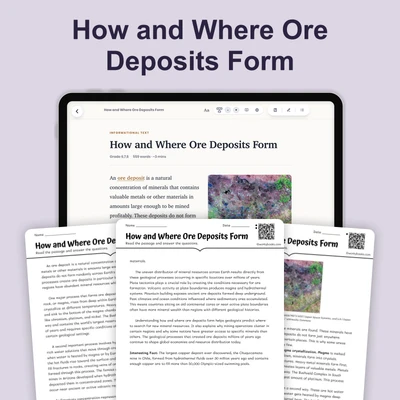
How and Where Do Ore Deposits Form - reading educational content
Grades 6–8

How and Where Do Ore Deposits Form

Reading Passage · MS-ESS3-1

$1.50
Unlock more from Workybooks
Unlimited
$29.99/yr$49.99
  • All 10,000+ resources
  • Unlimited downloads
  • Cancel anytime
Or pay as you goFrom $1.50
See all plans

40% off until Aug 1

Passage
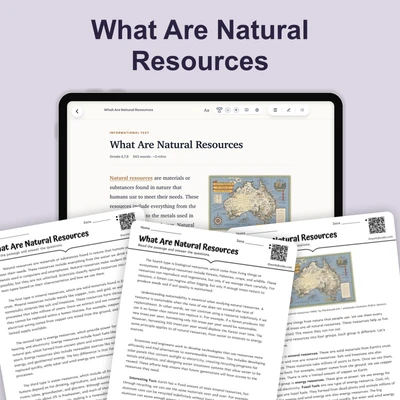
What Are Natural Resources - reading educational content
Grades 6–8

What Are Natural Resources

Reading Passage · MS-ESS3-1

$1.50
Passage
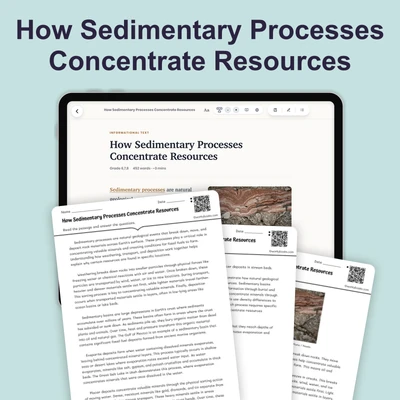
How Sedimentary Layers Build Resource Deposits - reading educational content
Grades 6–8

How Sedimentary Layers Build Resource Deposits

Reading Passage · MS-ESS3-1

$1.50
Passage
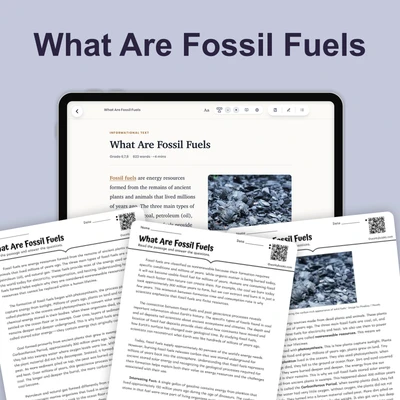
What Are Fossil Fuels - reading educational content
Grades 6–8

What Are Fossil Fuels

Reading Passage · MS-ESS3-1

$1.50
Passage
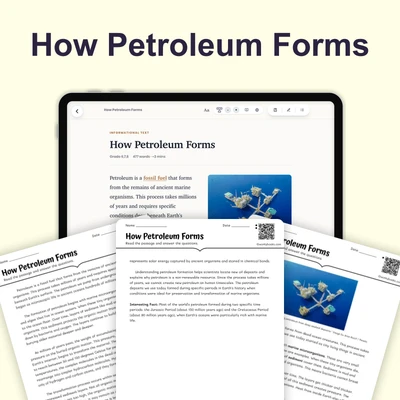
How Ancient Seas Form Petroleum Deposits - reading educational content
Grades 6–8

How Ancient Seas Form Petroleum Deposits

Reading Passage · MS-ESS3-1

$1.50
Passage
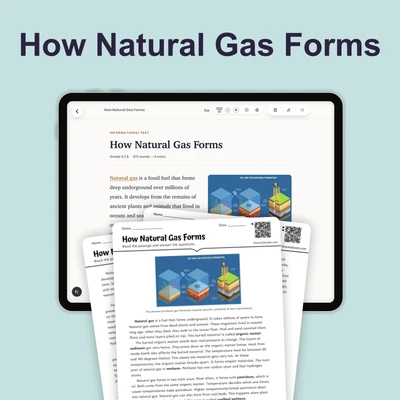
How Natural Gas Form and Collect Underground - reading educational content
Grades 6–8

How Natural Gas Form and Collect Underground

Reading Passage · MS-ESS3-1

$1.50
Passage
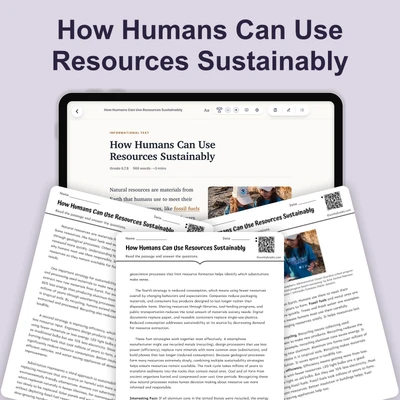
How Can Humans Use Earth's Resources Sustainably - reading educational content
Grades 6–8

How Can Humans Use Earth's Resources Sustainably

Reading Passage · MS-ESS3-1

$1.50
Passage
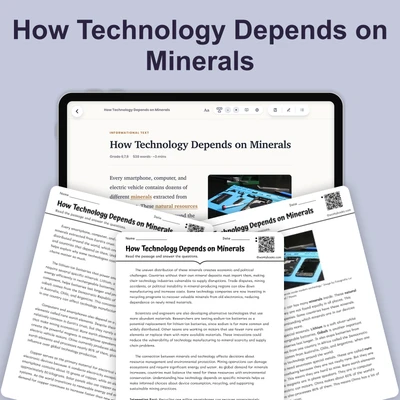
What Minerals Make Modern Technology Possible - reading educational content
Grades 6–8

What Minerals Make Modern Technology Possible

Reading Passage · MS-ESS3-1

$1.50
Passage
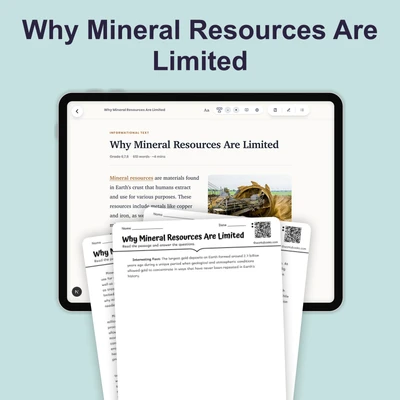
Why Are Mineral Resources Finite and Hard to Replace - reading educational content
Grades 6–8

Why Are Mineral Resources Finite and Hard to Replace

Reading Passage · MS-ESS3-1

$1.50

Get more from Workybooks

Three ways to use Workybooks — pick what fits.

Start free
$0
No credit card required
  • Access to limited resources
  • 1 download & 1 Instant Assign by code per day
  • 30-day assignment history
Create a free account
Pay as you go
From $1.50
Per resource, one-time
  • Download and keep forever
  • Online access while account is active
  • No subscription, no auto-renew
Open any resource and click Buy.
Best value
Unlock everything
$49.99$29.99 / year
Summer sale • 40% off until Aug 1
Renews at $49.99/year.
All 10,000+ resources, unlimited use
  • Download any worksheet, reader or printable
  • Play every game and assign to classrooms
  • Cancel anytime, no ads
Start unlimited access
Cancel anytime · No ads · Trusted by 30,000+ teachers

About these Earth's Resources worksheets and activities

In the earliest grades, students learn to identify basic natural resources like water, air, soil, and plants, and understand that people use these resources in daily life. As they progress through upper elementary, the focus deepens to include renewable and nonrenewable resources, the water cycle, mineral and energy resources, and the importance of conservation and sustainability. Students develop skills in classifying resources, analyzing human impact, and interpreting data from maps and diagrams.

Related concepts covered include fossil fuels, solar and wind energy, recycling, pollution, and responsible stewardship. The resources are designed to scaffold from simple observation and sorting activities in kindergarten to more complex reading passages and research projects in fifth grade, ensuring a coherent learning progression. Teachers will find materials that support both science inquiry and cross-curricular connections to literacy and math.

Using these in your classroom

Teachers can use this hub to differentiate instruction across a mixed-ability classroom. Choose grade-appropriate resources for whole-group lessons, then assign differentiated worksheets or digital games to small groups or centers for targeted practice. The printable and digital options allow for flexible use: independent practice, homework, intervention for struggling learners, or enrichment for advanced students. Use the reading passages and graphic organizers for literacy centers or as assessment tools. The no-prep, classroom-ready materials save planning time while ensuring standards-aligned instruction across all settings.

Standards alignment

These resources align with grade-level Common Core State Standards for reading informational text and with Next Generation Science Standards (NGSS) for Earth and human activity across grades K-5.

Frequently asked questions

Are these Earth's Resources worksheets printable?

Yes, many of our Earth's Resources worksheets are printable. Some resources are free, but most require a paid membership to access and print the full library of materials.

Are these Earth's Resources worksheets for kids of all elementary grades?

Absolutely. Our Earth's Resources worksheets for kids span kindergarten through fifth grade, with content and complexity adjusted for each grade level. You can filter by grade to find the right fit.

Do you have digital or interactive Earth's Resources activities?

Yes, we offer digital games and interactive activities alongside printable worksheets. These are great for centers or independent practice on devices. Most digital resources are available with a membership.

How can I use these resources to teach about conservation?

Our collection includes reading passages, graphic organizers, and activities focused on conservation, recycling, and reducing human impact. Use them in whole-group discussions, small groups, or as homework to reinforce key concepts across grades.