
Passage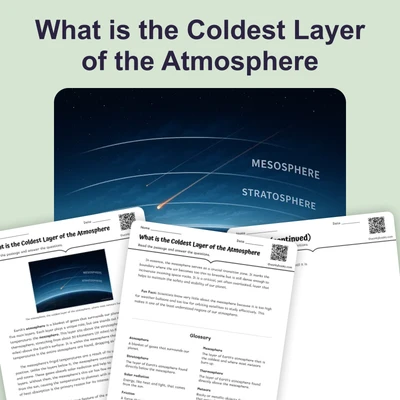
Grades 3–8
What is the Coldest Layer of the Atmosphere
Reading Passage
$1.50

Explore our collection of Earth's Spheres curriculum resources designed for grades K-8. These printable and digital worksheets, activities, reading passages, games, and graphic organizers help students understand the geosphere, hydrosphere, atmosphere, and biosphere. Some resources are free; most require a membership.
Reading Passage
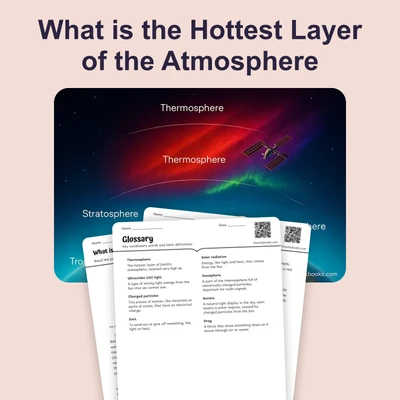
Reading Passage
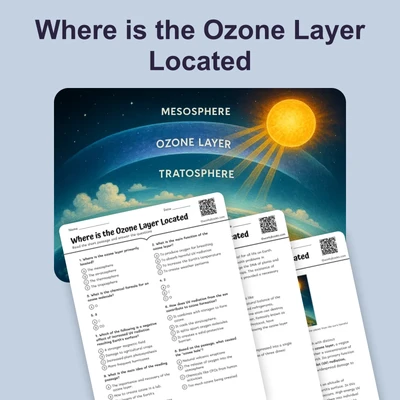
Reading Passage
Reading Passage · NGSS 4-ESS2-2
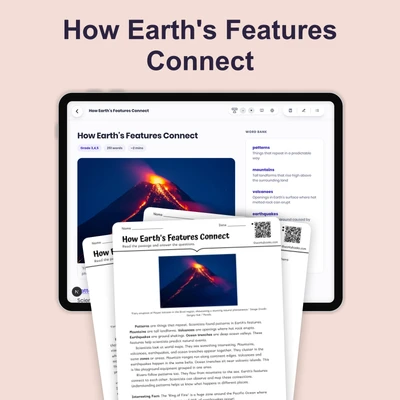
Reading Passage · NGSS 4-ESS2-2
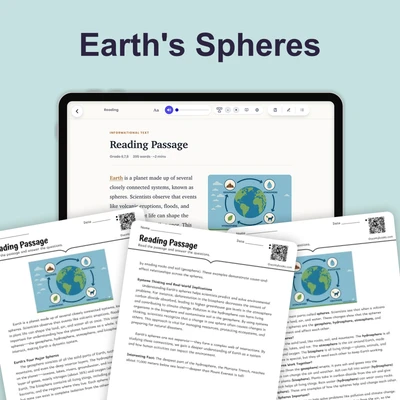
Reading Passage · MS-ESS2-4
40% off until Aug 1
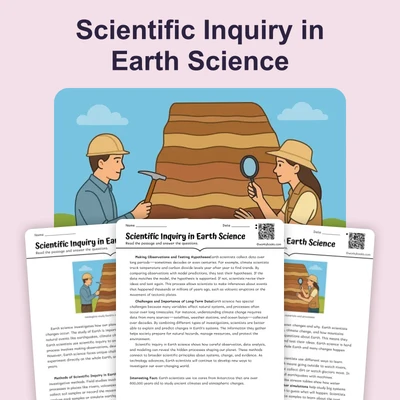
Reading Passage · MS-ESS1-4
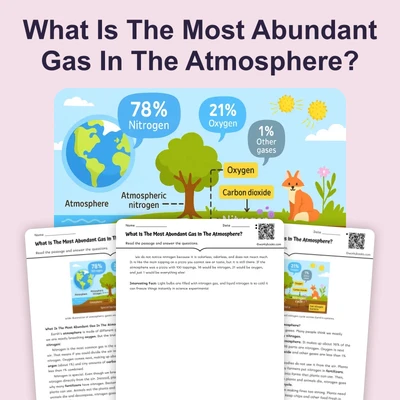
Reading Passage
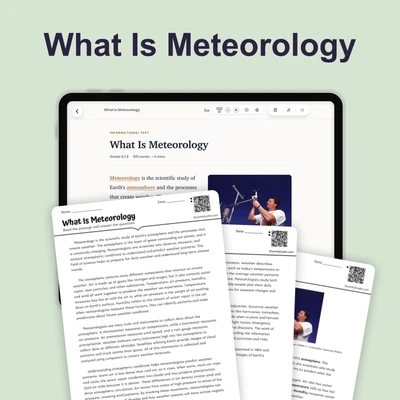
Reading Passage · MS-ESS2-5
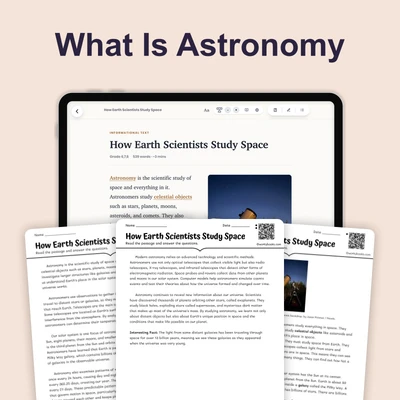
Reading Passage · MS-ESS1-1
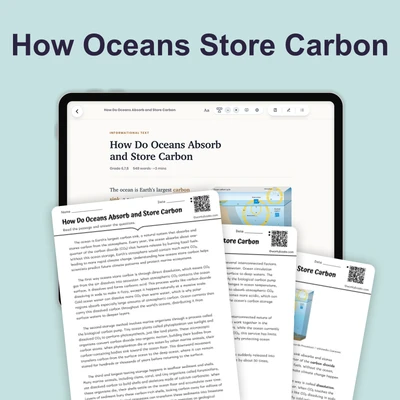
Reading Passage · MS-ESS2-1
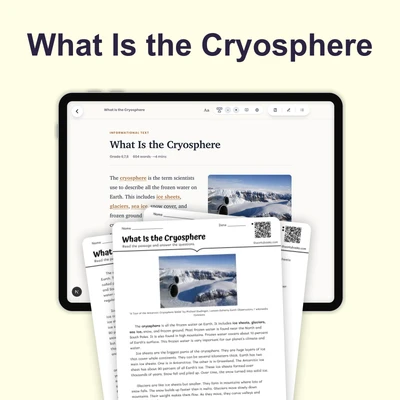
Reading Passage · MS-ESS2-1
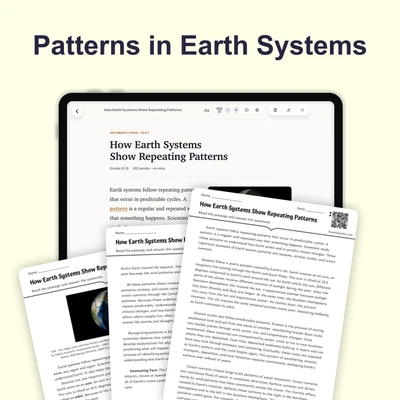
Reading Passage · MS-ESS2-1
40% off until Aug 1
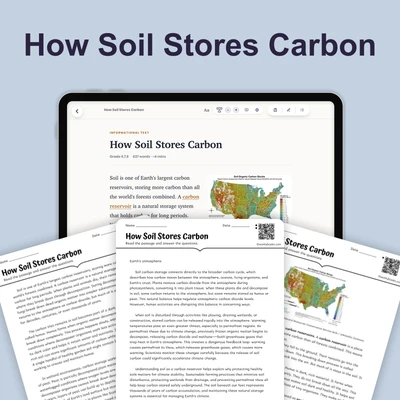
Reading Passage · MS-ESS2-1
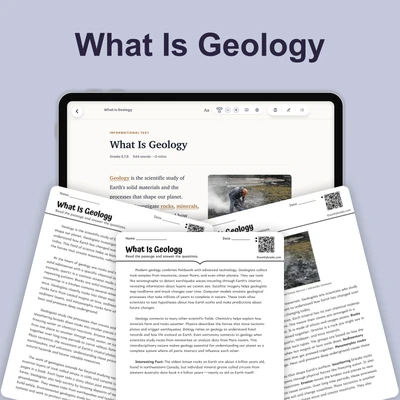
Reading Passage · MS-ESS2-1
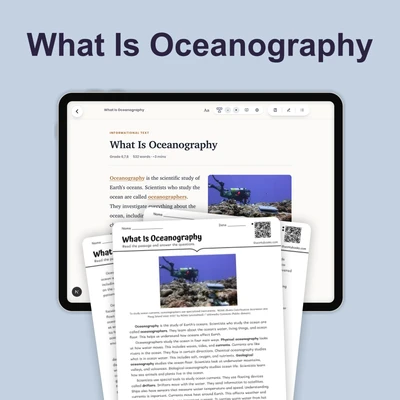
Reading Passage · MS-ESS2-4
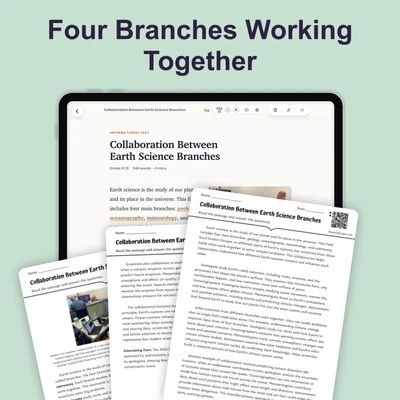
Reading Passage · MS-ESS2-1
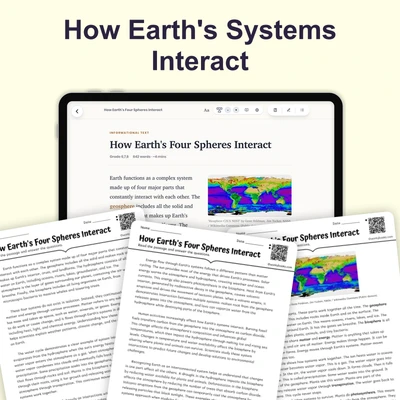
Reading Passage · MS-ESS2-1
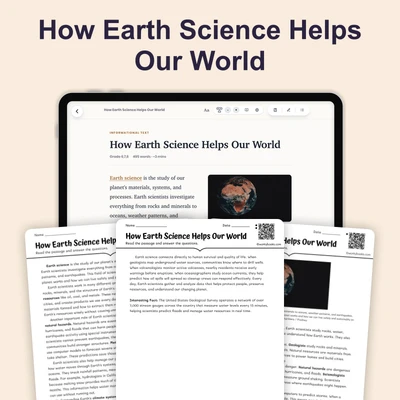
Reading Passage · MS-ESS3-1
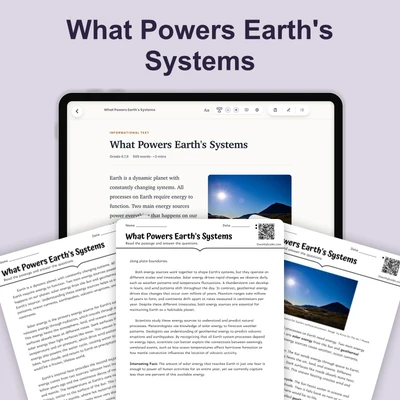
Reading Passage · MS-ESS2-1
40% off until Aug 1
Reading Passage · MS-ESS2-1
Reading Passage · MS-ESS2-1
Reading Passage · MS-ESS2-1
Reading Passage · MS-ESS2-1
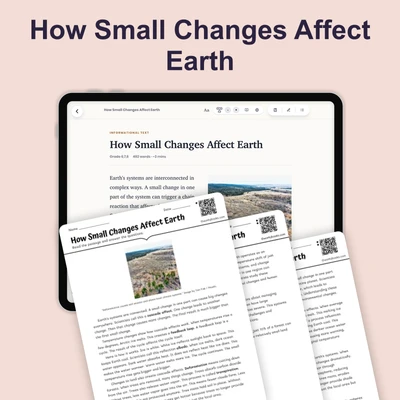
Reading Passage · MS-ESS2-1
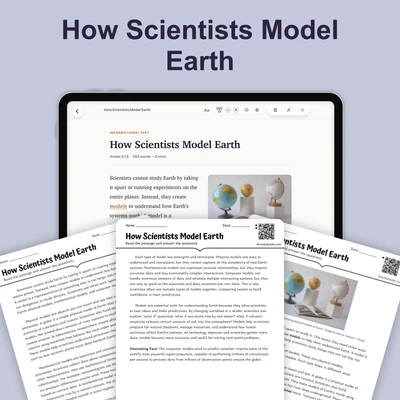
Reading Passage · MS-ESS2-1
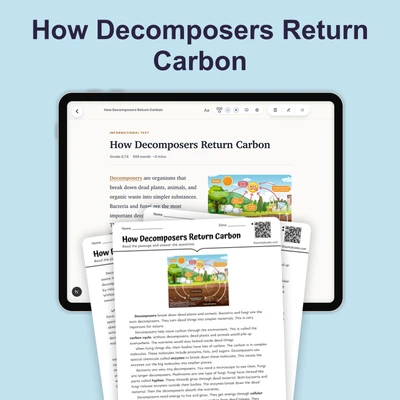
Reading Passage · MS-ESS2-1
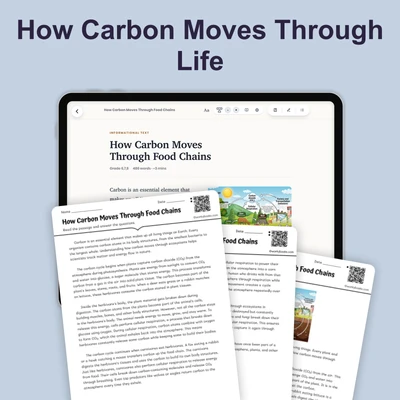
Reading Passage · MS-ESS2-1
Three ways to use Workybooks — pick what fits.
In the earliest grades, students learn that Earth has different parts, such as land, water, and air. They identify basic components of the geosphere (rocks, soil), hydrosphere (oceans, rivers), atmosphere (weather, clouds), and biosphere (plants, animals). As students progress through upper elementary and middle school, they explore interactions between spheres, such as how volcanoes affect the atmosphere or how plants cycle water. Resources include scaffolded reading passages, hands-on activities, graphic organizers, and games that build vocabulary and systems thinking.
Related concepts include the water cycle, weather and climate, rock cycle, ecosystems, and natural resources. Our resources help students connect these ideas across grade levels, using differentiated materials to meet varied learning needs. Whether introducing spheres or analyzing complex interactions, teachers can find no-prep, standards-aligned materials for their classroom.
This hub allows teachers to select resources by grade level and complexity, making it easy to differentiate across a mixed-ability room. Use whole-group activities to introduce concepts, then assign small-group center tasks or independent practice worksheets. Printable versions work well for homework or intervention, while digital resources support literacy centers or review. Teachers can also use these materials for assessment, such as exit tickets or project-based learning. The variety of resource types, from games to graphic organizers, supports multiple instructional settings.
These resources align with Common Core and Next Generation Science Standards (NGSS) for Earth and space science, covering grade-appropriate concepts from K to 8. Specific standards vary by grade level.
Yes, many of our Earth's Spheres worksheets printable versions are available. You can download and print them for classroom or home use. Some resources are free; a membership is required for full access.
Absolutely. These Earth's Spheres worksheets for kids span grades K-8, with content differentiated to match each grade level. Early grades focus on basic identification, while upper grades explore sphere interactions and systems thinking.
In addition to worksheets, we offer reading passages, hands-on activities, games, and graphic organizers. These resources support various learning styles and instructional settings, from whole-group lessons to independent practice.
Some resources are free, but most require a paid membership. A membership gives you unlimited access to all printable and digital materials across grade levels, including differentiated and scaffolded versions.