
Passage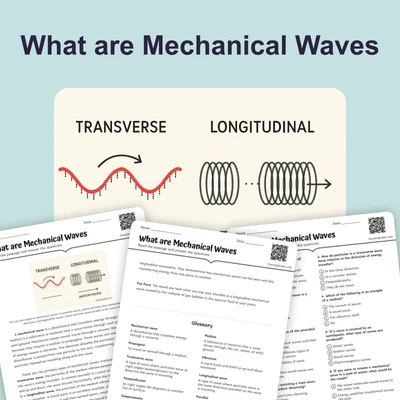
Grades 3–8
What are Mechanical Waves
Reading Passage
$1.50

Explore our collection of Wave Properties curriculum resources for grades K-8. This hub includes printable and digital worksheets, reading passages, games, and activities that help students understand how waves transfer energy. Resources are teacher-authored and span from basic concepts to more complex applications.
Reading Passage
Reading Passage · NGSS 4-PS4-3
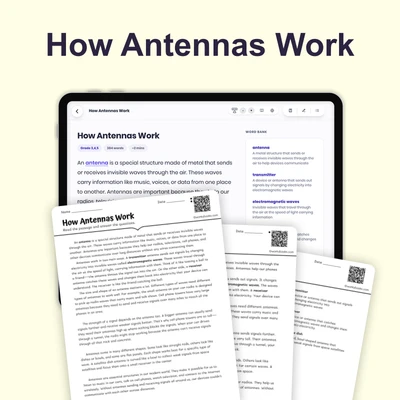
Reading Passage · NGSS 4-PS4-3
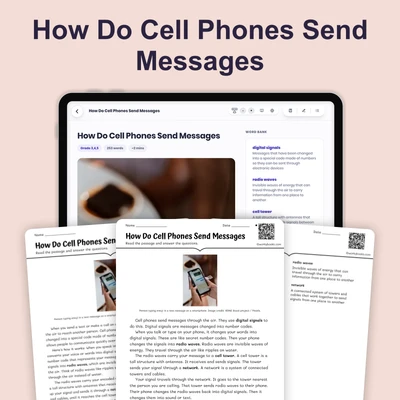
Reading Passage · NGSS 4-PS4-1
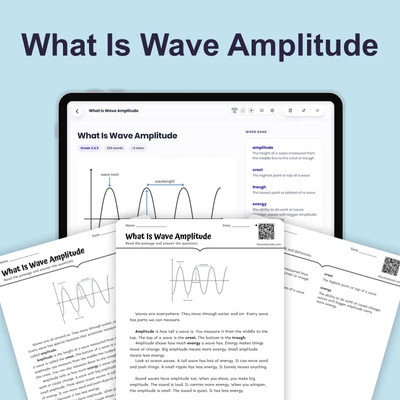
Reading Passage · NGSS 4-PS4-1
Reading Passage · NGSS 4-PS4-1
40% off until Aug 1
Reading Passage · NGSS 4-PS4-3
Reading Passage · NGSS 4-PS4-3
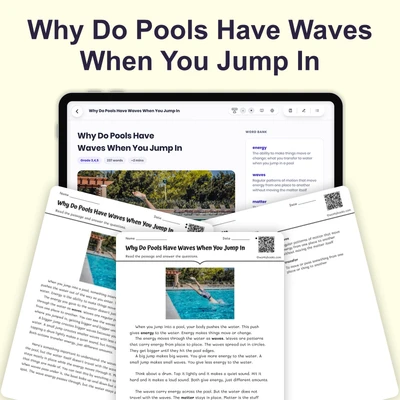
Reading Passage · NGSS PS4.A
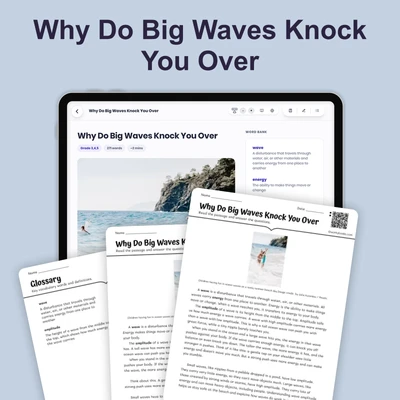
Reading Passage · NGSS PS4.A
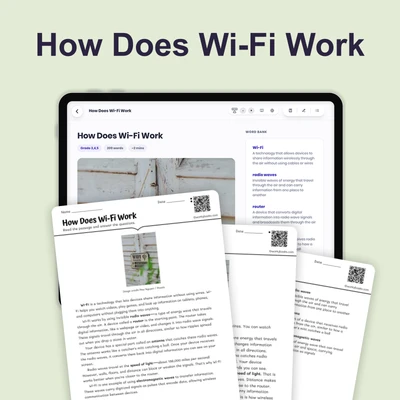
Reading Passage · NGSS 4-PS4-3
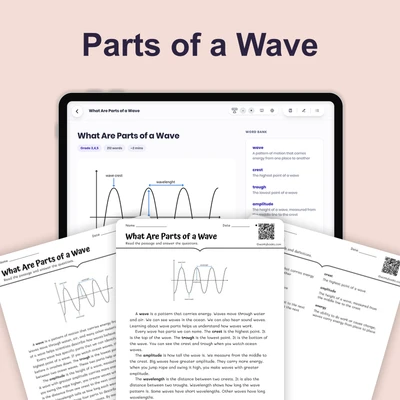
Reading Passage · NGSS 4-PS4-1
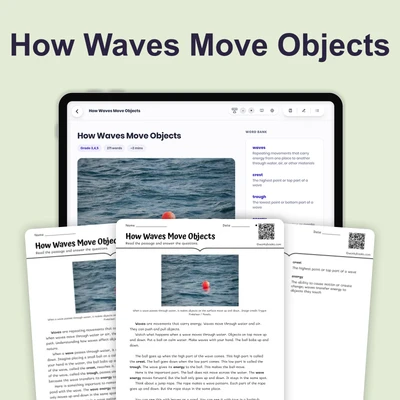
Reading Passage · NGSS 4-PS4-1
40% off until Aug 1
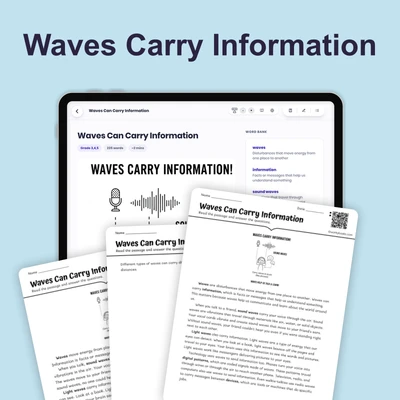
Reading Passage · NGSS 4-PS4-3
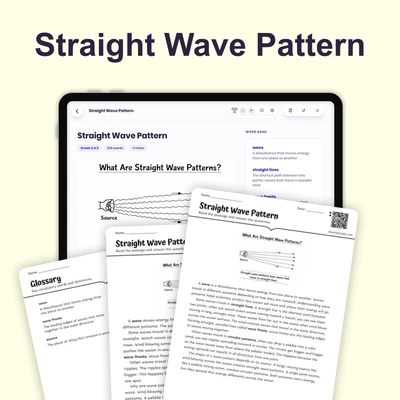
Reading Passage · NGSS 4-PS4-1
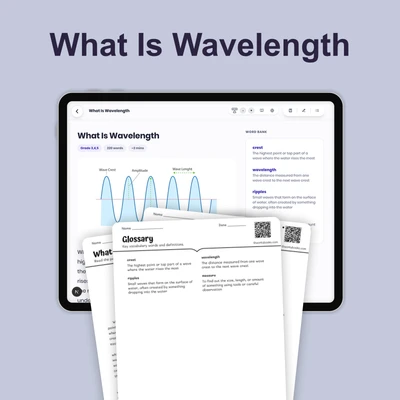
Reading Passage · NGSS 4-PS4-1
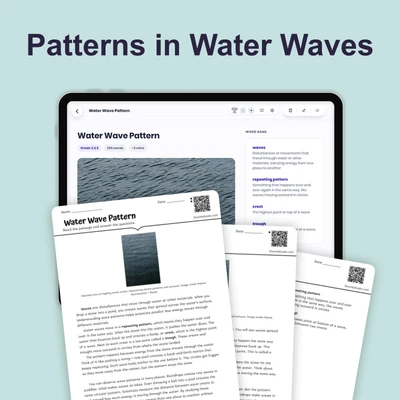
Reading Passage · NGSS PS4.A
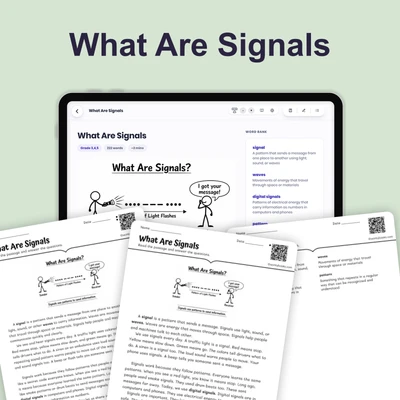
Reading Passage · NGSS 4-PS4-3
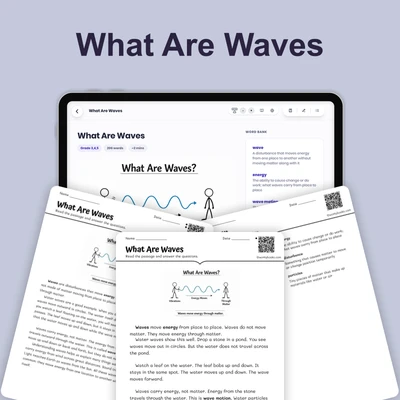
Reading Passage · NGSS 4-PS4-1
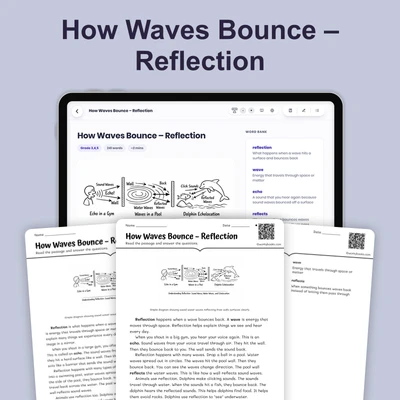
Reading Passage
40% off until Aug 1
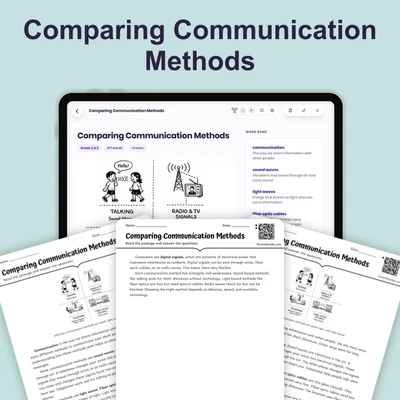
Reading Passage · NGSS 4-PS4-3
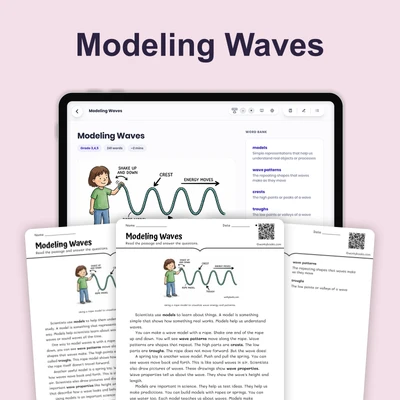
Reading Passage · NGSS 4-PS4-1
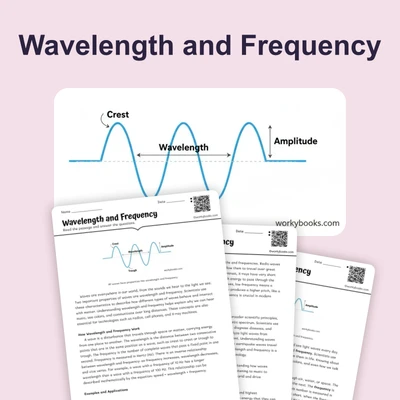
Reading Passage · MS-PS4-1
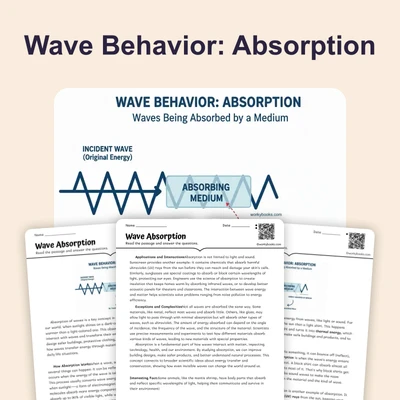
Reading Passage · MS-PS4-2
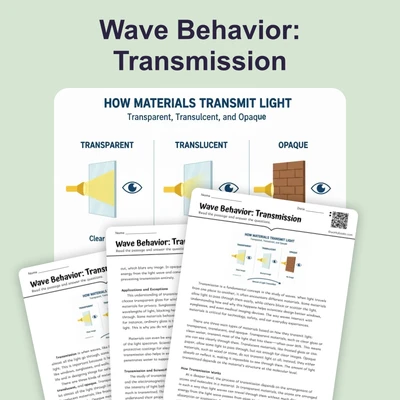
Reading Passage · MS-PS4-2
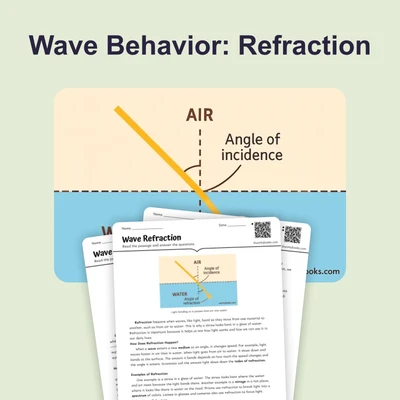
Reading Passage · MS-PS4-2
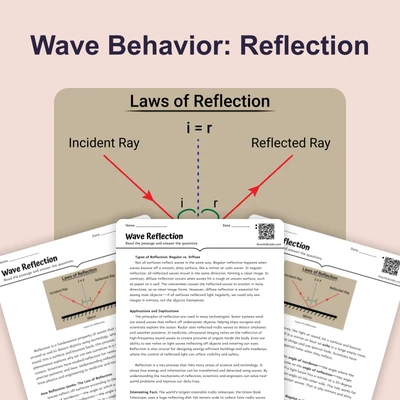
Reading Passage · MS-PS4-2
40% off until Aug 1
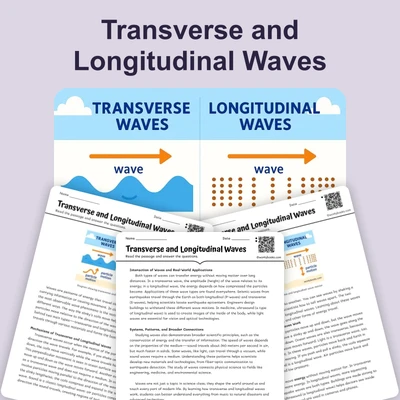
Reading Passage · MS-PS4-1
Reading Passage · MS-PS4-1
Reading Passage · MS-PS4-1
Reading Passage · MS-PS4-1
Three ways to use Workybooks — pick what fits.
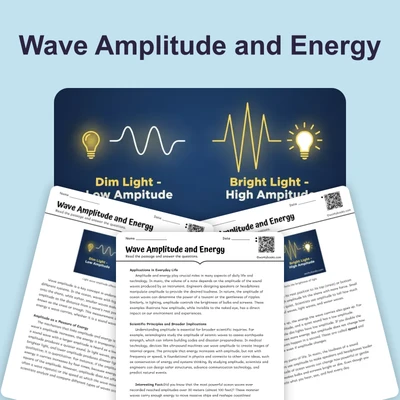
Wave Properties is introduced in the earliest grades with simple observations of sound and light waves, such as how vibrations create sound or how shadows form. In the primary grades, students explore amplitude, wavelength, and frequency through hands-on activities and reading passages. As students progress into upper elementary and middle school, they analyze wave interactions like reflection, refraction, and diffraction, and apply concepts to real-world phenomena such as seismic waves and the electromagnetic spectrum.
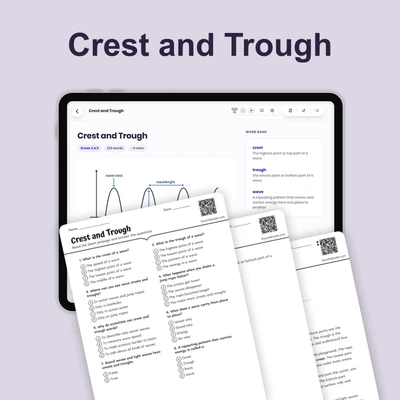
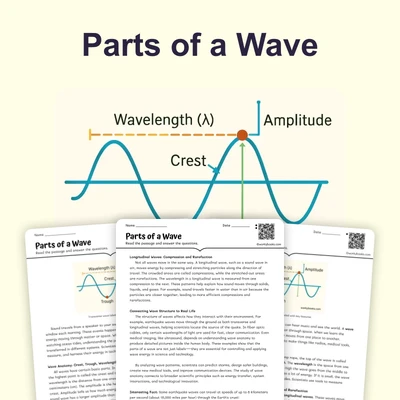
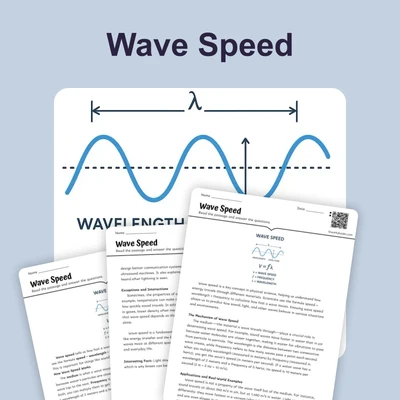
Related concepts include energy transfer, mediums, transverse and longitudinal waves, crests and troughs, and wave speed. Resources are scaffolded to build understanding from concrete examples to abstract principles. Students develop skills in observation, data collection, graphing, and critical thinking as they investigate wave behavior. The collection includes no-prep worksheets, interactive games, graphic organizers, and literacy-integrated reading passages that support both science and ELA standards.
Teachers can use this hub to differentiate instruction across a mixed-ability classroom. Choose simpler worksheets and hands-on activities for introductory lessons or intervention, and more complex reading passages and problem-solving tasks for enrichment. Resources work well for whole-group instruction, small-group centers, independent practice, homework, and review. Use the digital activities for literacy centers or remote learning, and printable worksheets for quick assessment or substitute plans. The scaffolded design allows you to assign the same topic at different levels, ensuring all students build understanding at their own pace.
These resources align with grade-level Common Core State Standards for literacy in science and technical subjects, as well as Next Generation Science Standards (NGSS) for waves and their applications across grades K-8.
Yes, many of our Wave Properties worksheets are printable. You can download and print them for classroom use. Some resources are also available in digital format for online learning. Please note that while some are free, most require a membership.
Absolutely. Our Wave Properties worksheets for kids are designed for grades K-8. They include age-appropriate activities, reading passages, and games that make learning about waves fun and accessible. Younger students explore basic concepts like sound and light, while older students tackle more advanced topics.
This hub includes a variety of resources: printable worksheets, interactive digital activities, reading passages with comprehension questions, hands-on experiments, graphic organizers, and games. All are teacher-authored and designed to support different learning styles and instructional settings.
Many worksheets and reading passages come with answer keys and can be used as formative or summative assessments. You can also use the graphic organizers to check understanding, or assign digital activities for quick feedback. The scaffolded levels allow you to assess students at their individual skill levels.