
Passage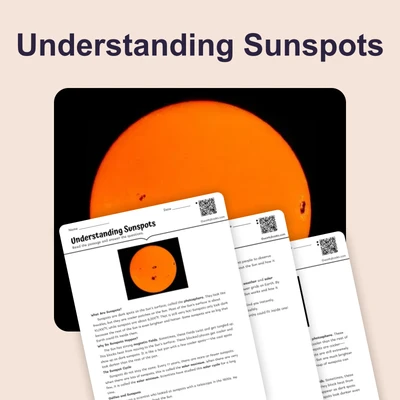
Grades 3–6
Understanding Sunspots
Reading Passage
Free

Explore our collection of Stars and Galaxies curriculum resources for grades K-8. From the first look at the night sky in kindergarten to exploring galaxy types in upper elementary, these printable and digital materials support the science classroom. Some resources are free; most require a paid membership.
Reading Passage
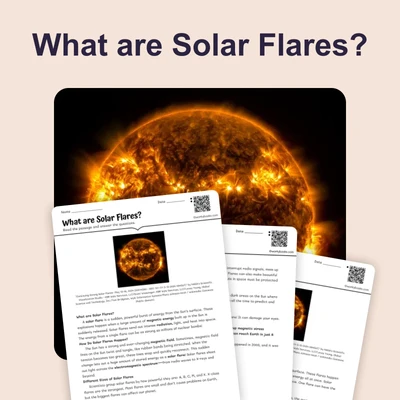
Reading Passage
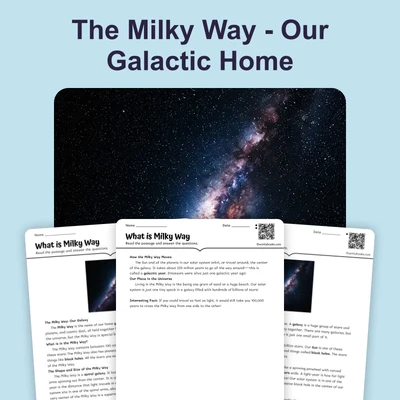
Reading Passage · 5-ESS1-1
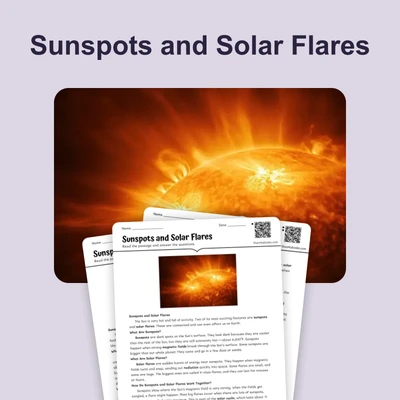
Reading Passage · RI.4.1
Reading Passage · 5-ESS1-1
Reading Passage · MS-ESS1-1
40% off until Aug 1
Reading Passage · MS-ESS1-1
Reading Passage · MS-ESS1-1
Reading Passage · MS-ESS1-1
Reading Passage · MS-ESS1-1
Reading Passage · MS-ESS1-1
Reading Passage · MS-ESS1-1
Reading Passage · MS-ESS1-1
40% off until Aug 1
Reading Passage · MS-ESS1-1
Reading Passage · MS-ESS1-1
Reading Passage · MS-ESS1-3
Reading Passage · MS-ESS1-1
Reading Passage · MS-ESS1-1
Reading Passage · MS-ESS1-1
Reading Passage · MS-ESS1-3
40% off until Aug 1
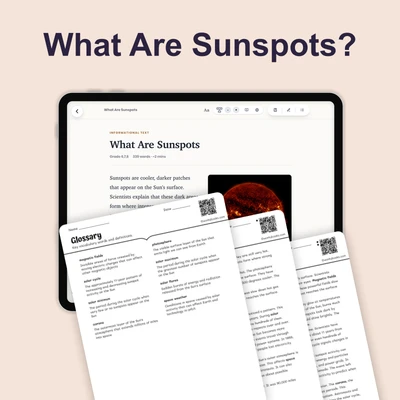
Reading Passage · MS-ESS1-1
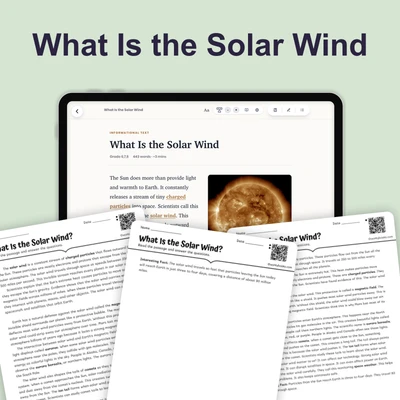
Reading Passage · MS-ESS1-1
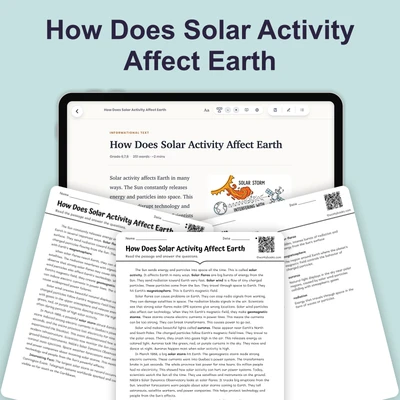
Reading Passage · MS-ESS1-1
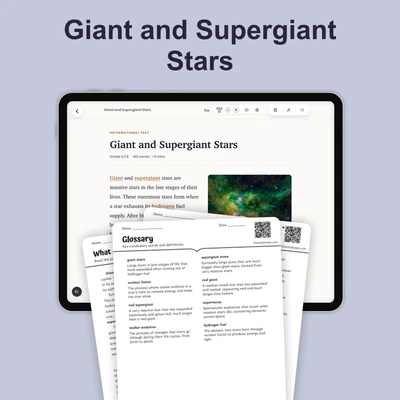
Reading Passage · MS-ESS1-1
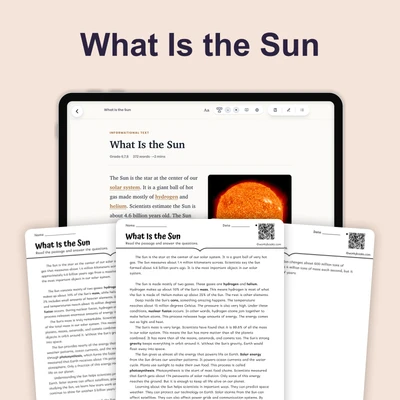
Reading Passage · MS-ESS1-1
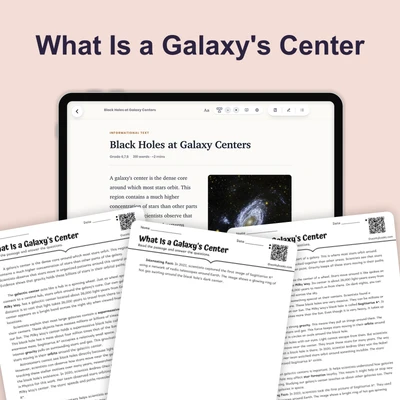
Reading Passage · MS-ESS1-2
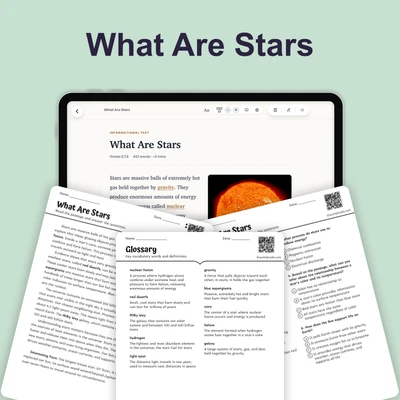
Reading Passage · MS-ESS1-1
40% off until Aug 1
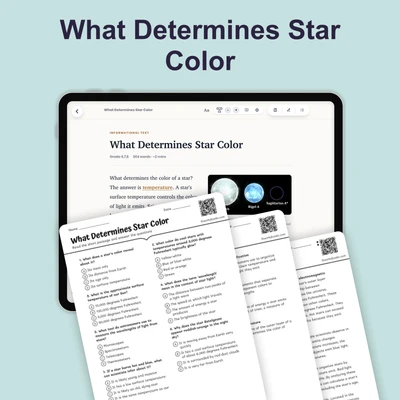
Reading Passage · MS-ESS1-1
Reading Passage · MS-ESS1-1
Reading Passage · MS-ESS1-1
Reading Passage · MS-ESS1-1
Reading Passage · MS-ESS1-2
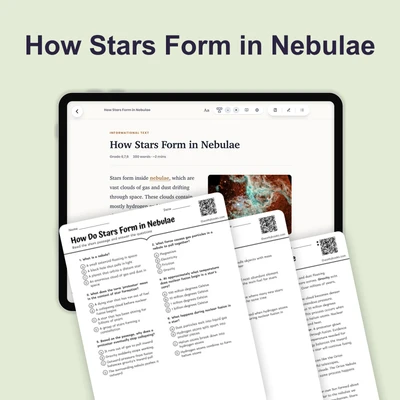
Reading Passage · MS-ESS1-1
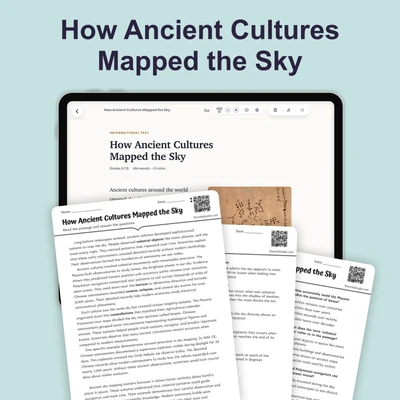
Reading Passage · MS-ESS1-1
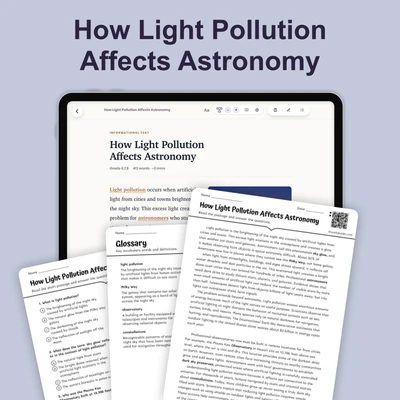
Reading Passage · MS-ESS1-1
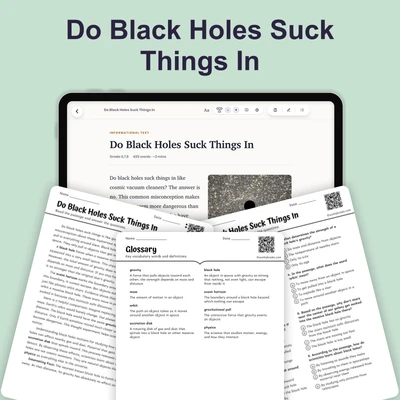
Reading Passage · MS-ESS1-1
Three ways to use Workybooks — pick what fits.
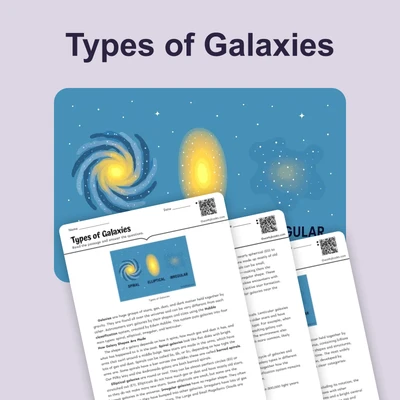
Stars and Galaxies is a foundational topic in Earth and space science that begins in the earliest grades with observing the Sun and Moon and noticing patterns of stars. In kindergarten and first grade, students learn that the Sun is a star and that stars are visible at night. As they move into second and third grade, they explore how stars differ in brightness and color, and they begin to understand that the Sun is the closest star to Earth. By fourth and fifth grade, students are ready to investigate constellations, star life cycles, and the structure of galaxies, including the Milky Way. They learn about tools like telescopes and how scientists classify galaxies as spiral, elliptical, or irregular. Our resources cover these concepts through reading passages, worksheets, hands-on activities, games, and graphic organizers. Related concepts include the solar system, light, gravity, and the scale of the universe, all of which connect to build a comprehensive understanding of our place in space.
Across the grade range, students practice observation, data collection, comparing and contrasting, and using models to explain phenomena. They develop skills in reading informational text, interpreting diagrams, and applying vocabulary such as constellation, nebula, and galaxy. The progression ensures that each year builds on prior knowledge, deepening both content understanding and scientific reasoning.
Teachers can use this hub to find the right level for their class by filtering resources by grade. In a mixed-ability room, use differentiated worksheets and reading passages for small groups or literacy centers. The digital resources work well for whole-group instruction on an interactive whiteboard, while printable versions support independent practice, homework, or intervention. Use the games and graphic organizers for review or as a formative assessment. The scaffolded design allows you to assign the same topic at different complexity levels, ensuring every student can access the content. These classroom-ready, no-prep materials save planning time while covering key standards.
These resources align with grade-level Common Core State Standards for reading informational text and with Next Generation Science Standards for Earth and space science across grades K-5. They support key practices such as asking questions, analyzing data, and constructing explanations.
Yes, many of our Stars and Galaxies worksheets printable resources are available as PDFs for easy printing. Some are free, while others require a paid membership. You can also access digital versions for use on devices.
Yes, these Stars and Galaxies worksheets for kids span grades K-5, with content that progresses from basic star observation to galaxy classification. Each resource is labeled by grade level so you can choose the right challenge.
Some resources are free, but most require a paid membership. A membership gives you unlimited access to all worksheets, activities, games, and reading passages across the site.
The resources are differentiated, offering multiple versions of the same topic at various reading levels. You can assign simpler passages to struggling readers and more complex texts to advanced students, all within the same lesson.