
Passage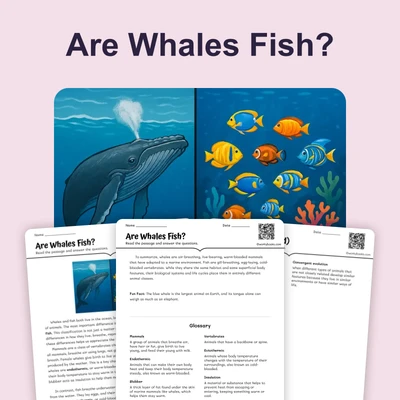
Grades 3–8
Are Whales Fish?
Reading Passage
$1.50

Explore our collection of Natural Selection curriculum resources for grades K-8, including worksheets, games, readers, and activities. This hub helps teachers and parents introduce evolution concepts from simple life cycles to complex adaptation, with materials that grow alongside students.
Reading Passage
Reading Passage
Reading Passage
Reading Passage
Reading Passage
Reading Passage
40% off until Aug 1
Reading Passage
Reading Passage · MS-LS3-1
Reading Passage · MS-LS4-2
Reading Passage · MS-LS4-2
Reading Passage · MS-LS4-2
Reading Passage · MS-LS4-2
Reading Passage · MS-LS4-2
40% off until Aug 1
Reading Passage · MS-LS4-2
Reading Passage · MS-LS4-2
Reading Passage · MS-LS4-2
Reading Passage · MS-LS4-2
Reading Passage · MS-LS4-2
Reading Passage · MS-LS4-1
Reading Passage · MS-LS4-2
40% off until Aug 1
Reading Passage · MS-LS4-4
Reading Passage · MS-LS4-4
Reading Passage · MS-LS4-4
Reading Passage · MS-LS4-4
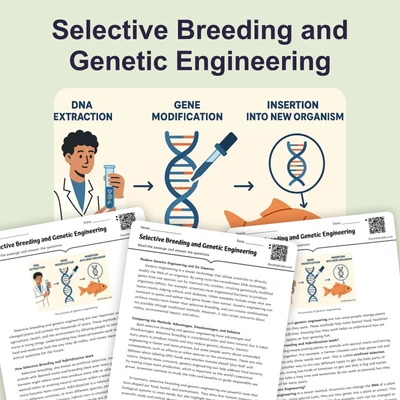
Reading Passage · MS-LS4-5
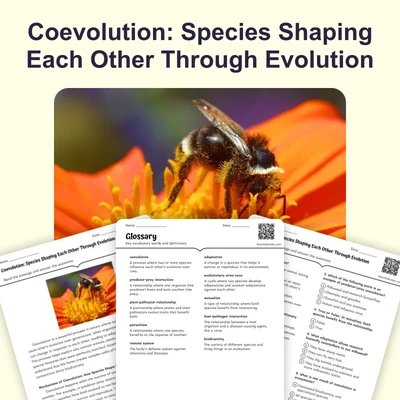
Reading Passage · MS-LS4-4
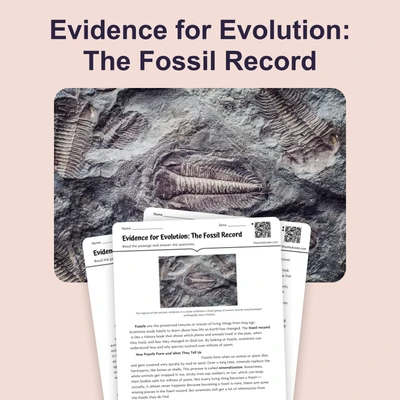
Reading Passage · MS-LS4-1
40% off until Aug 1
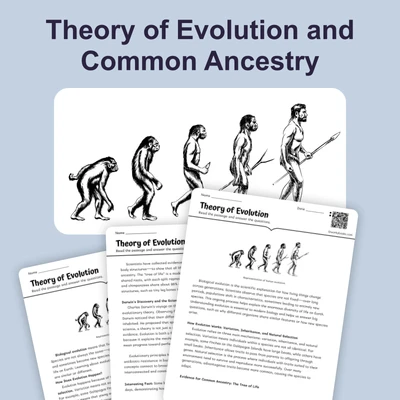
Reading Passage · MS-LS4-1
Reading Passage · MS-LS1-4
Reading Passage
Reading Passage
Reading Passage
Reading Passage
Reading Passage
Reading Passage
Reading Passage
Three ways to use Workybooks — pick what fits.
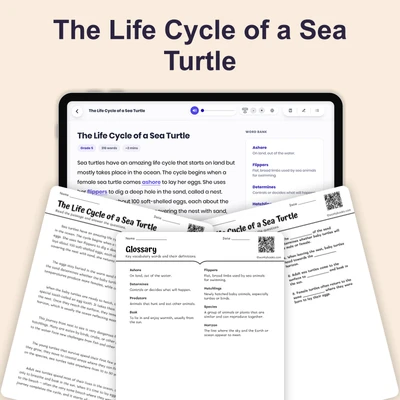
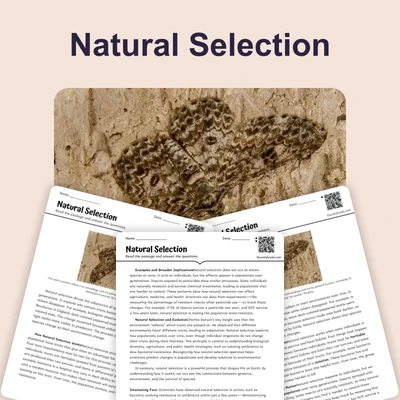
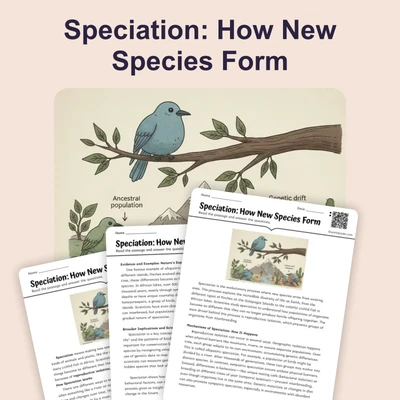
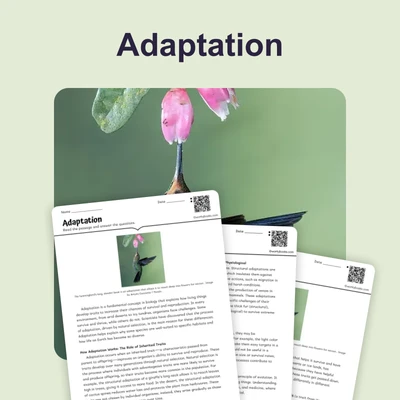
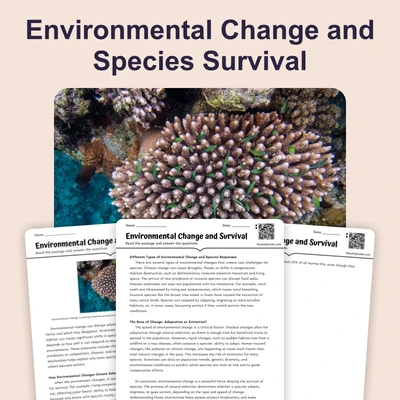
Natural Selection is a foundational science concept that builds across elementary and middle school. In the earliest grades, students observe life cycles and basic traits, such as how a sea turtle's journey from egg to adult involves survival challenges. As they progress, they explore variation, adaptation, and the role of environment in shaping species. By upper elementary and middle school, learners analyze how advantageous traits become more common over generations.
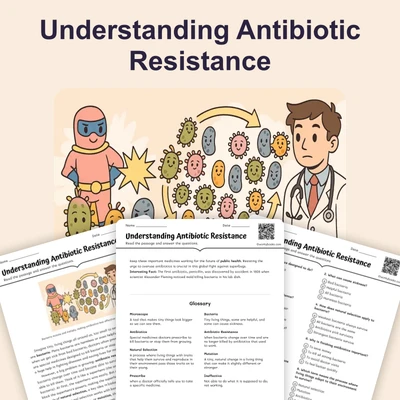
Our resources cover related entities like adaptation, variation, survival, heredity, and extinction, connecting to real-world examples such as camouflage, beak shapes, and antibiotic resistance. Students practice critical thinking, data analysis, and evidence-based reasoning through hands-on activities and reading passages. The progression ensures that younger students build foundational knowledge while older students engage in deeper inquiry, all within a scaffolded, teacher-authored framework.
Teachers can use this hub to differentiate across a mixed-ability classroom by selecting resources at varying reading levels and complexity. For whole-group instruction, use a shared reading passage or interactive game to introduce key concepts. Small groups can work on differentiated worksheets or graphic organizers, while literacy centers feature independent practice with printable or digital activities. Assign homework that reinforces life cycle or adaptation ideas, and use the resources for intervention or review before assessments. The mix of no-prep printables and digital tools allows flexible integration into any instructional setting, from science blocks to cross-curricular literacy centers.
These resources are aligned with grade-level Common Core standards for reading informational text and writing, as well as Next Generation Science Standards (NGSS) for life science across grades K-8.
Yes, many of our Natural Selection worksheets are printable and ready for classroom use. Some resources are free, while others require a paid Workybooks membership to access the full library.
Absolutely. Our Natural Selection worksheets for kids are designed for grades K-8, with age-appropriate language and activities. Younger students explore life cycles, while older students tackle adaptation and evolution.
This hub spans kindergarten through 8th grade. Each resource is tagged with a specific grade range, so you can easily find materials that match your students' level and scaffold instruction as needed.
Some resources on this page are free to download, but most require a paid Workybooks membership. A membership gives you unlimited access to all printable and digital resources across every grade and subject.