
Passage
Grades 5–8
The Night Sky
Reading Passage · MS-ESS1-1
$1.50

Explore our Earth, Sun and Moon curriculum resources hub, featuring worksheets, activities, reading passages, games, and graphic organizers for grades K-5. These teacher-authored materials help students build understanding of our solar system's key relationships across multiple grade levels.
Reading Passage · MS-ESS1-1
Reading Passage · MS-ESS1-3
Reading Passage · MS-ESS1-1
Reading Passage · MS-ESS1-1
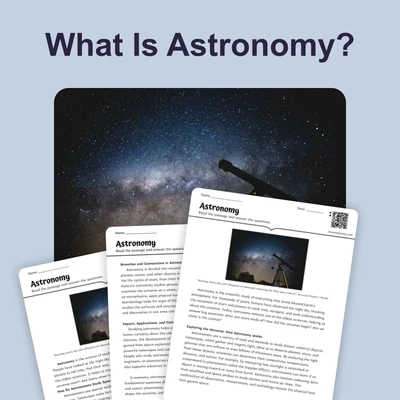
Reading Passage · MS-ESS1-2
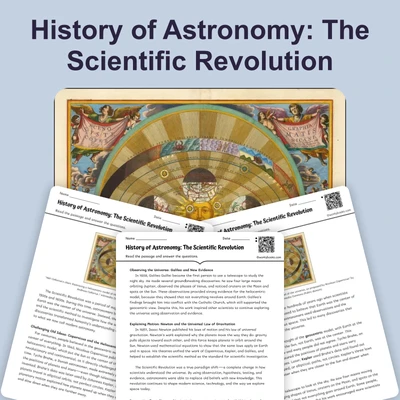
Reading Passage · MS-ESS1-1
40% off until Aug 1
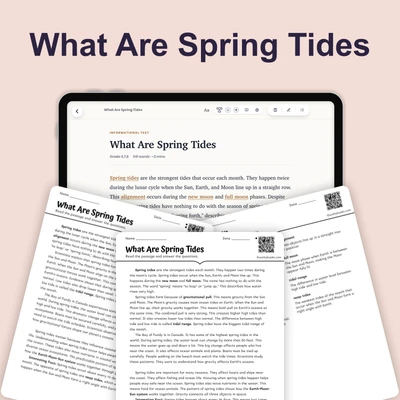
Reading Passage · MS-ESS1-2
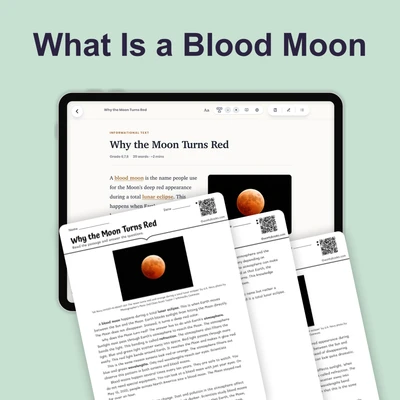
Reading Passage · MS-ESS1-1
Reading Passage · MS-ESS1-1
Reading Passage · MS-ESS1-1
Reading Passage · MS-ESS1-1
Reading Passage · MS-ESS1-1
Reading Passage · MS-ESS1-1
40% off until Aug 1
Reading Passage · MS-ESS1-1
Reading Passage · MS-ESS1-1
Reading Passage · MS-ESS1-1
Reading Passage · MS-ESS1-2
Reading Passage · MS-ESS1-2
Reading Passage · MS-ESS1-1
Reading Passage · MS-ESS1-2
40% off until Aug 1
Reading Passage · MS-ESS1-1
Reading Passage · MS-ESS1-2
Reading Passage · MS-ESS1-2
Reading Passage · MS-ESS1-2
Reading Passage · MS-ESS1-2
Reading Passage · MS-ESS1-2
Reading Passage · MS-ESS1-1
40% off until Aug 1
Reading Passage · MS-ESS1-1
Reading Passage · MS-ESS1-1
Reading Passage · MS-ESS1-1
Reading Passage · MS-ESS1-1
Reading Passage · MS-ESS1-2
Reading Passage · MS-ESS1-1
Reading Passage · MS-ESS1-2
40% off until Aug 1
Reading Passage · MS-ESS1-2
Reading Passage · MS-ESS1-2
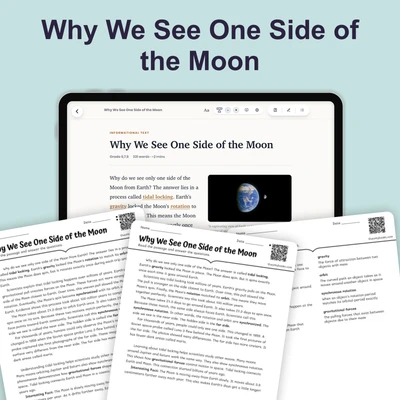
Reading Passage · MS-ESS1-2
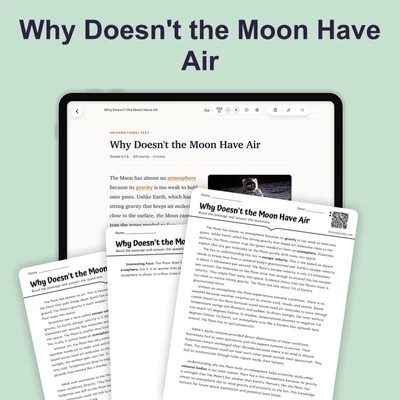
Reading Passage · MS-ESS1-2
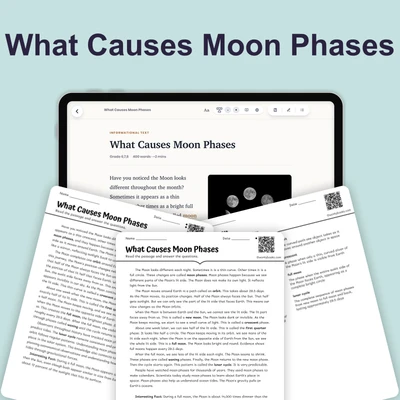
Reading Passage · MS-ESS1-1
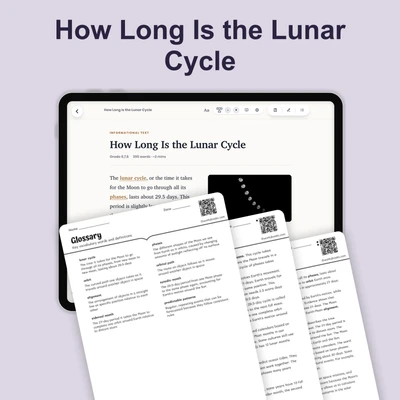
Reading Passage · MS-ESS1-1
Reading Passage · MS-ESS1-1
Three ways to use Workybooks — pick what fits.
In the earliest grades, students begin by observing the Sun and Moon in the sky, noting patterns like day and night and the Moon's changing shape. As they progress through upper elementary, they deepen their understanding of Earth's rotation and orbit, the Moon's phases, eclipses, and the role of gravity in the solar system. Related concepts include seasons, tides, shadows, and the relative sizes and distances of Earth, Sun, and Moon.
Our resources scaffold this progression: kindergarteners may sort day and night pictures, while fifth graders model lunar phases or analyze data on sunrise and sunset times. Each resource is designed to build on prior knowledge, with differentiated options to meet students where they are. Whether you need no-prep worksheets for independent practice or hands-on activities for small groups, this hub has you covered.
Teachers can use this hub to differentiate across a mixed-ability classroom by selecting resources at varying complexity levels. Use the same topic for whole-group instruction, then assign scaffolded worksheets for independent practice, printable games for literacy centers, and digital activities for homework or intervention. The collection supports small groups, review, and assessment, with both printable and digital formats to fit any setting. Mix and match to create a cohesive unit that meets every learner's needs.
These resources align with grade-level Common Core standards for reading informational text and writing, as well as Next Generation Science Standards (NGSS) for Earth and space science across grades K-5.
Yes, many of our Earth, Sun and Moon worksheets printable resources are available as PDFs for easy classroom use. Some are free, while others require a paid membership.
Absolutely. Our Earth, Sun and Moon worksheets for kids span grades K-5, with content that progresses from basic day/night concepts to lunar phases and seasons. You can filter by grade level to find the right fit.
Yes, in addition to printable worksheets, we provide digital activities, games, and reading passages that work on tablets and computers. Some are free; full access requires a membership.
You can use our worksheets and graphic organizers as formative or summative assessments. Many include answer keys and are designed to check understanding of key concepts like moon phases or Earth's rotation.