
Passage
Grades 1–8
When Was Neptune Discovered?
Reading Passage · 1-ESS1-1
$1.50

Explore our Solar System curriculum resources hub for grades K-8, featuring printable and digital worksheets, reading passages, games, and activities. Whether you teach kindergarten or middle school, you will find no-prep, standards-aligned materials to engage students in learning about planets, moons, eclipses, tides, and space exploration.
Reading Passage · 1-ESS1-1
Reading Passage · RL.2.10
Reading Passage · RI.4.4
Reading Passage · MS-ESS1-2
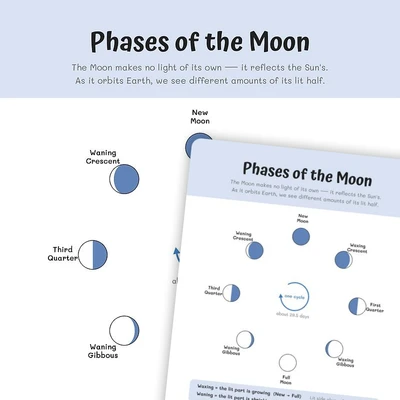
Worksheet · NGSS. MS-ESS1-1
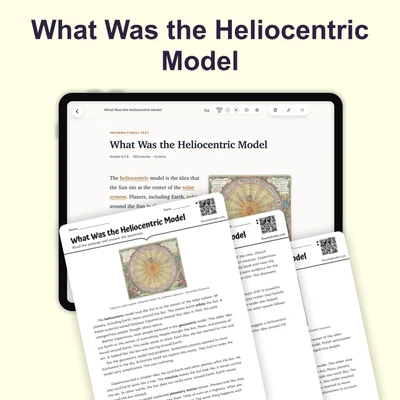
Reading Passage · MS-ESS1-2
40% off until Aug 1
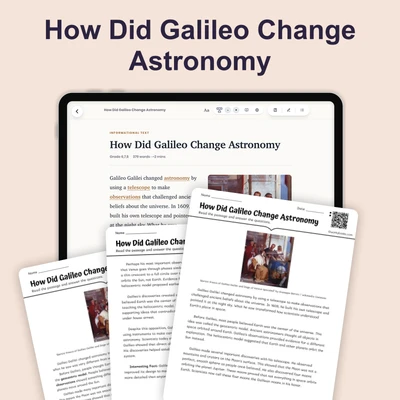
Reading Passage · MS-ESS1-2
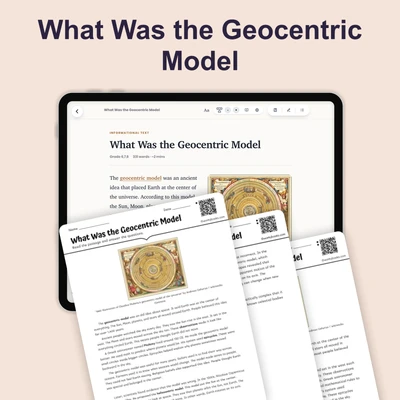
Reading Passage · MS-ESS1-2
Reading Passage · MS-ESS1-1
Reading Passage · MS-ESS1-2
Reading Passage · MS-PS2-4
Reading Passage · MS-PS2-4
Reading Passage · MS-ESS1-3
40% off until Aug 1
Reading Passage · MS-PS2-4
Reading Passage · MS-ESS1-3
Reading Passage · MS-ESS1-3
Reading Passage · MS-ESS1-3
Reading Passage · MS-ESS1-3
Reading Passage · MS-ESS1-3
Reading Passage · MS-ESS1-2
40% off until Aug 1
Reading Passage · MS-ESS1-3
Reading Passage · MS-ESS1-3
Reading Passage · MS-ESS1-3
Reading Passage · MS-ESS1-3
Reading Passage · MS-ESS1-3
Reading Passage · MS-ESS1-3
Reading Passage · MS-ESS1-3
40% off until Aug 1
Reading Passage · MS-ESS1-3
Reading Passage · MS-ESS1-3
Reading Passage · MS-ESS1-3
Reading Passage · MS-ESS1-3
Reading Passage · MS-ESS1-3
Reading Passage · MS-ESS1-3
Reading Passage · MS-ESS1-3
40% off until Aug 1
Reading Passage · MS-ESS1-3
Reading Passage · MS-ESS1-3
Reading Passage · MS-PS2-2
Reading Passage · MS-ESS1-3
Reading Passage · MS-ESS1-3
Reading Passage · MS-ESS1-3
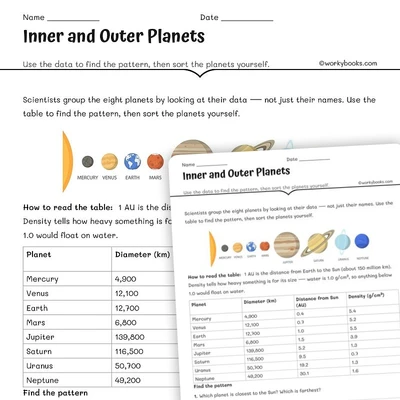
Worksheet · NGSS MS-ESS1-3
40% off until Aug 1
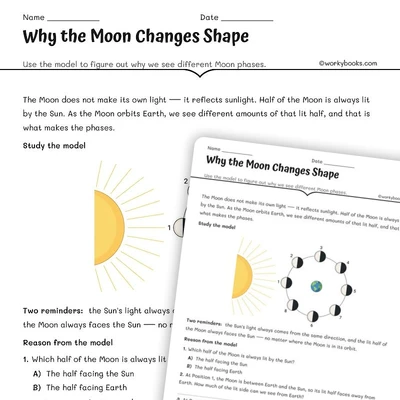
Worksheet · NGSS. MS-ESS1-1
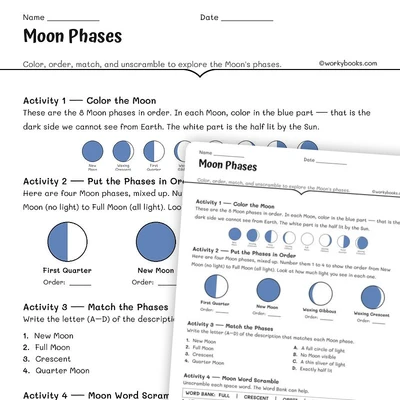
Worksheet · NGSS. MS-ESS1-1
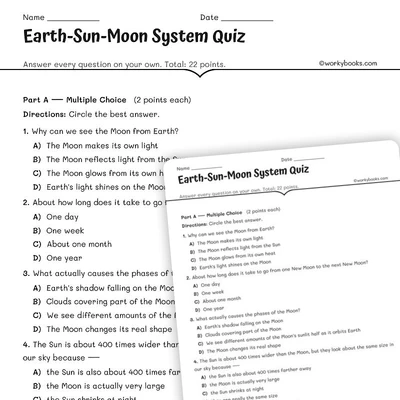
Worksheet · NGSS. MS-ESS1-1
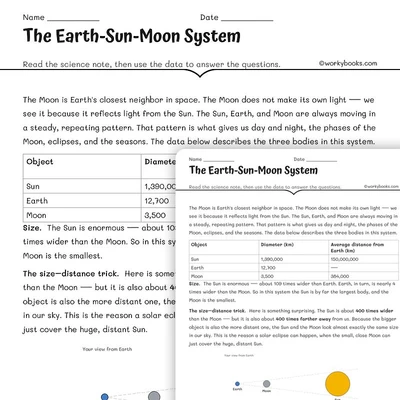
Worksheet · NGSS. MS-ESS1-1
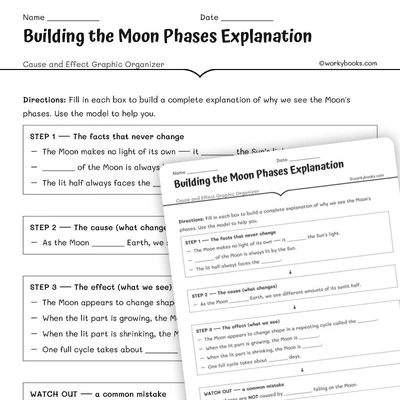
Worksheet · NGSS. MS-ESS1-1
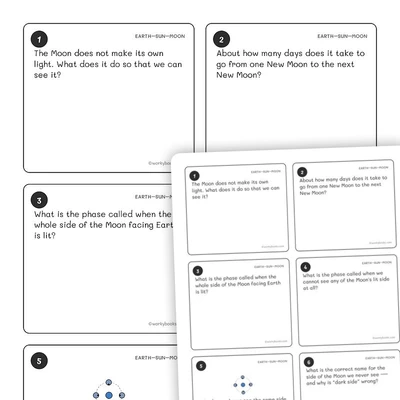
Worksheet · NGSS. MS-ESS1-1
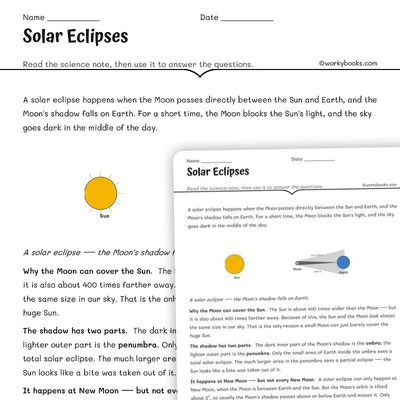
Worksheet · NGSS MS-ESS1-1
Worksheet · NGSS MS-ESS1-1
Worksheet · NGSS MS-ESS1-1
Three ways to use Workybooks — pick what fits.
In the earliest grades, students begin by identifying the Sun as a star and naming the planets in order. They explore basic concepts like day and night, the Moon's phases, and why the Sun appears to move across the sky. As students progress through upper elementary and into middle school, the content deepens to include gravitational forces, tidal patterns, eclipse mechanics, and the tools of space exploration. Resources cover related concepts such as rocket propulsion, satellite technology, and how seasons affect life on Earth. This progression ensures that foundational ideas are scaffolded into more complex scientific reasoning, with differentiated materials supporting learners at every stage.
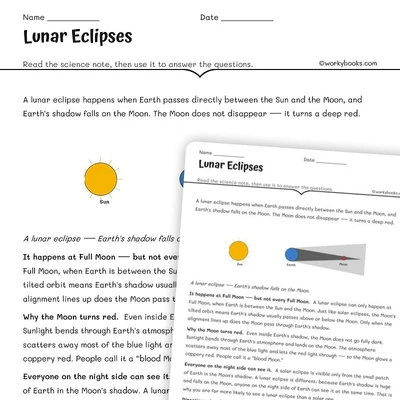
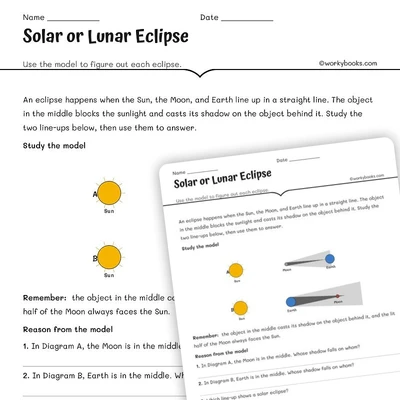
Teachers will find reading passages that explain why planets speed up near the Sun, how eclipses occur, and why the Moon turns red during a lunar eclipse. Activities include graphic organizers, comprehension quizzes, and hands-on observation guides like backyard astronomy journals. The hub also offers interactive elements and audio-integrated features to support diverse learners, making it a comprehensive toolkit for building solar system knowledge across multiple grade levels.
This hub is designed for flexible use across instructional settings. For whole-group instruction, select a grade-appropriate reading passage and use the included comprehension questions to guide discussion. In small groups or literacy centers, assign differentiated versions of the same topic so each student works at their level. The printable worksheets work well for independent practice or homework, while digital resources can be assigned through your learning management system. Use the materials for intervention by choosing a lower-grade version of a concept, or for review and assessment with the built-in quizzes and graphic organizers. Mix and match printable and digital resources to meet the needs of a mixed-ability classroom, ensuring every student can access the content.
All resources are aligned to grade-level Common Core standards for reading informational text and to Next Generation Science Standards (NGSS) for Earth and Space Science, covering topics such as the Earth-Sun-Moon system, gravitational forces, and patterns in the solar system across grades K-8.
Yes, many of our Solar System worksheets are printable and can be downloaded as PDFs for easy classroom use. Some resources are also available in digital format for online assignments. While some are free, a Workybooks membership is required to access the full library.
Absolutely. Our Solar System worksheets for kids span grades K-8, with content that progresses from simple planet identification in kindergarten to complex topics like eclipse mechanics and tidal forces in middle school. Each resource includes differentiated versions to match student readiness.
In addition to worksheets, this hub includes reading passages, graphic organizers, comprehension quizzes, writing prompts, and hands-on activities like sky journals. Many passages include audio-integrated features for accessibility and Spanish translations.
Each topic typically offers multiple versions at different reading levels, along with simplified text, Spanish translations, and graphic organizers. You can assign the same concept to the whole class but provide different versions based on each student's reading ability or language needs.